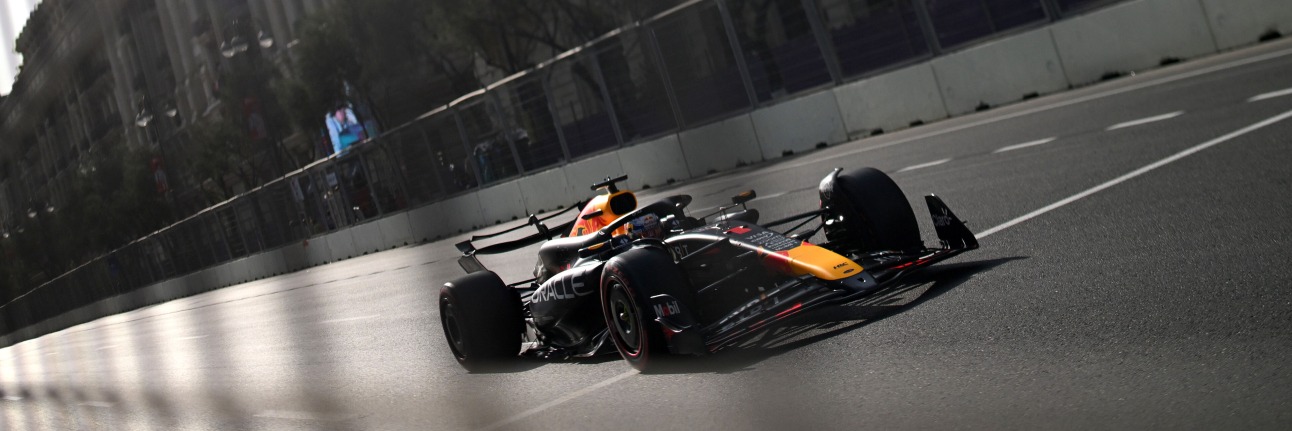
An ode to DRS
28 November 2025It doesn’t feel like too long ago that one of F1’s most controversial acronyms – DRS or drag reduction system – made its debut. But now, 14 seasons on, the paddock is preparing to bid adieu to the overtaking aid that has become part of the furniture in contemporary motorsport.
Introduced in 2011 as a solution to F1’s overtaking drought, DRS was designed to make overtaking possible in an era where increased speeds of modern machinery had increased the difficulty of following in the turbulent wake of another car.
And it delivered on that promise. Perhaps a little too well. To many, it was artificial. It detracted from the art of racing wheel-to-wheel. And yet, it has generated some truly heart-stopping moments in F1’s modern era.
Ever since its inception, it’s been a constant topic of conversation. Whether it’s too weak or too powerful. Whether or not the racing is ‘pure’. In the past 14 years, the FIA has never quite managed to strike a balance to appease fans, drivers and critics alike.
In 2026, DRS will be replaced by new Active Aerodynamics (X-Mode and Z-Mode) and a manual "Override" energy boost, which may come with their own set of criticisms. But before DRS is resigned to the history books, we’re taking a look at how it has evolved and some of its defining moments.
Up to now
When DRS debuted in Australia 2011, the rules were far more relaxed than they are in 2025. While usage was restricted to designated zones during the race, just like it is now, drivers were free to open the wing whenever they wanted during practice and qualifying.
The risk was that drivers were opening the flap as early as possible on corner exits, and through flat out turns like Abbey at Silverstone, leading to hairy moments as the drivers tackled challenging turns with substantially less grip.
From 2012, that loophole was closed. DRS was restricted to designated activation zones across all sessions. The system settled into a rhythm and terms like DRS train entered the F1 vernacular, while complaints persisted that it was either too powerful or too weak.
As cars became wider and draggier with the 2017 regulations, DRS lost some of its punch. In 2019, the FIA responded by increasing the size of the opening slot in the rear wing from 65mm to 85mm. That small difference increased the speed delta significantly, ensuring the system remained effective even on high-downforce tracks.
When the ground-effect era arrived in 2022, DRS was rumoured to be scrapped as turbulent air would be less of a problem with the new car philosophies. Instead, it stayed as a safety net.
The final major tweak came in 2024, when the FIA allowed activation after just one lap (down from two) after a start or Safety Car. This radical change made restarts all the more crucial in a fitting final chapter for DRS.
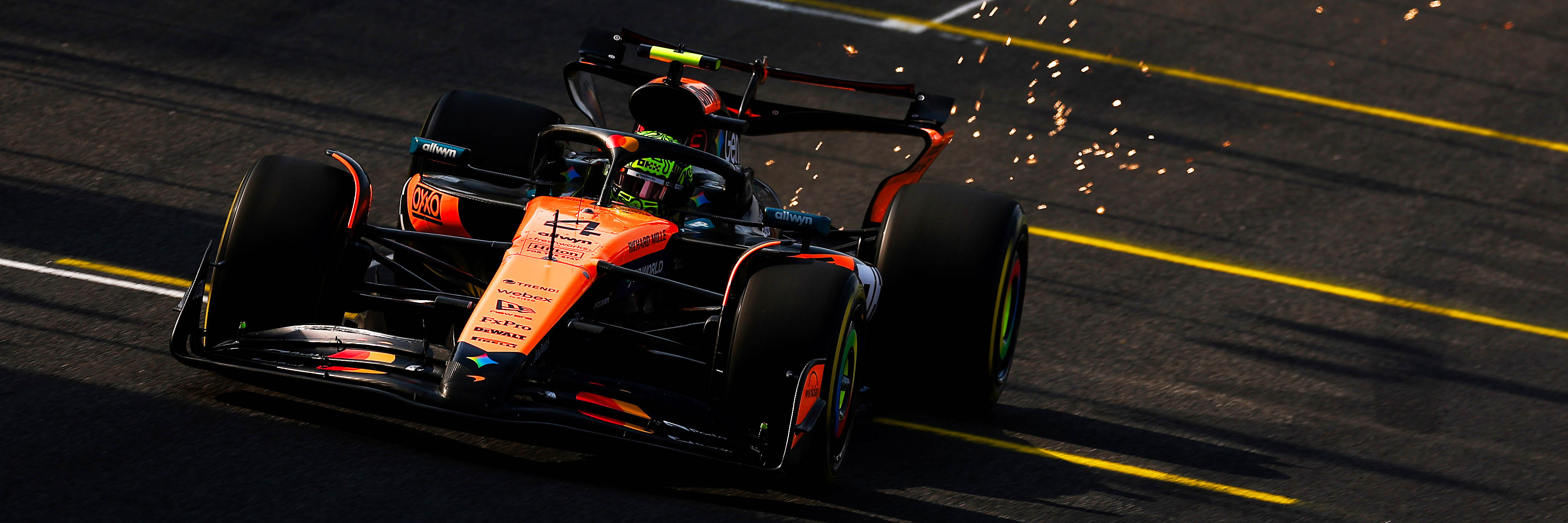
Now, as the sun begins to set on the 2025 season, DRS leaves behind a complicated legacy. It revived racing when a solution was needed, but did it suck the soul out of wheel-to-wheel combat? Perhaps, a look at some of the best DRS overtakes will answer that question.
The best DRS overtakes
Vettel does the dummy (2017 Spanish Grand Prix)
Having seized the lead from polesitter Lewis Hamilton into Turn 1, Sebastian Vettel showed he was willing to get his elbows out from the word go in the 2017 Spanish Grand Prix.
Ferrari pitted Sebastian earlier than the Mercedes duo, and so the German driver had to get past Valtteri Bottas on track.
With fading tyre life, Bottas struggled to keep Vettel behind and on the run down to Turn 1, the four-time champion made his move.
The Mercedes driver had been defending well, so Vettel had to try something a little different. Blasting down the main straight with his DRS wide open, he feigned to the outside, forcing Bottas to defend, before swerving back to the inside.
Dipping two wheels on the grass at top speed, he flirted with the boundaries of the circuit to snatch the position into Turn 1.
The move was as decisive for the race as it was thrilling to watch, proving that just because an overtake was induced by DRS, it didn’t have to be a simple case of breezing past on the straight.
WATCH: Sebastian Vettel's move on Valtteri Bottas at the 2017 Spanish Grand Prix
Hamilton’s Sakhir triple (2018 Bahrain Grand Prix)
Lewis Hamilton started the second round of the 2018 season from ninth on the grid due to a penalty, but he didn't stay there long.
On Lap 5, he found himself behind a squabbling trio of Fernando Alonso, Nico Hulkenberg, and Esteban Ocon on the main straight.
Smelling blood, Hamilton got the perfect exit out of the final corner, and the extra speed advantage from the DRS helped him to close in.
In one spectacular sweep, he pulled out of the slipstream and braked late, sailing past all three cars into Turn 1.
WATCH: Lewis Hamilton's triple overtake at the 2018 Bahrain Grand Prix
Albon confronts the Wall of Champions (2024 Canadian Grand Prix)
In the penultimate season with DRS, Alex Albon delivered a classic move on the streets of Montreal. Stuck behind a squabbling Daniel Ricciardo and Esteban Ocon, Albon exited the hairpin perfectly.
Activating DRS, he charged down the back straight. As Ricciardo defended, Albon went to the outside, but then Ocon assumed the racing line heading into the chicane.
Albon made another switch to the inside, threading his Williams through the two cars to pass both on the entry of one corner.
WATCH: Alex Albon threads the needle at the 2024 Canadian Grand Prix
The next chapter
DRS may not have been the most popular F1 innovation in its lifetime, but it has left the sport with some lasting memories.
The active aerodynamics that will take its place will serve the same purpose, and therefore have the same potential for controversy as DRS did 14 years ago.
Only time will tell if fans will welcome the new system with open arms, or if there’ll be calls for a return to DRS in the coming seasons.