F1 Sprint explained: An F101 beginner’s guide to Sprint Races
16 October 2025Since its inception at the 2021 British Grand Prix, the F1 Sprint has become a highly anticipated part of the modern-day calendar, delivering short, sharp and action-packed races at select events throughout the year.
But what exactly is the Sprint, how does it work, and how does it affect a Formula 1 weekend? Our F101 beginner’s guide has everything you need to know.
What is the F1 Sprint?
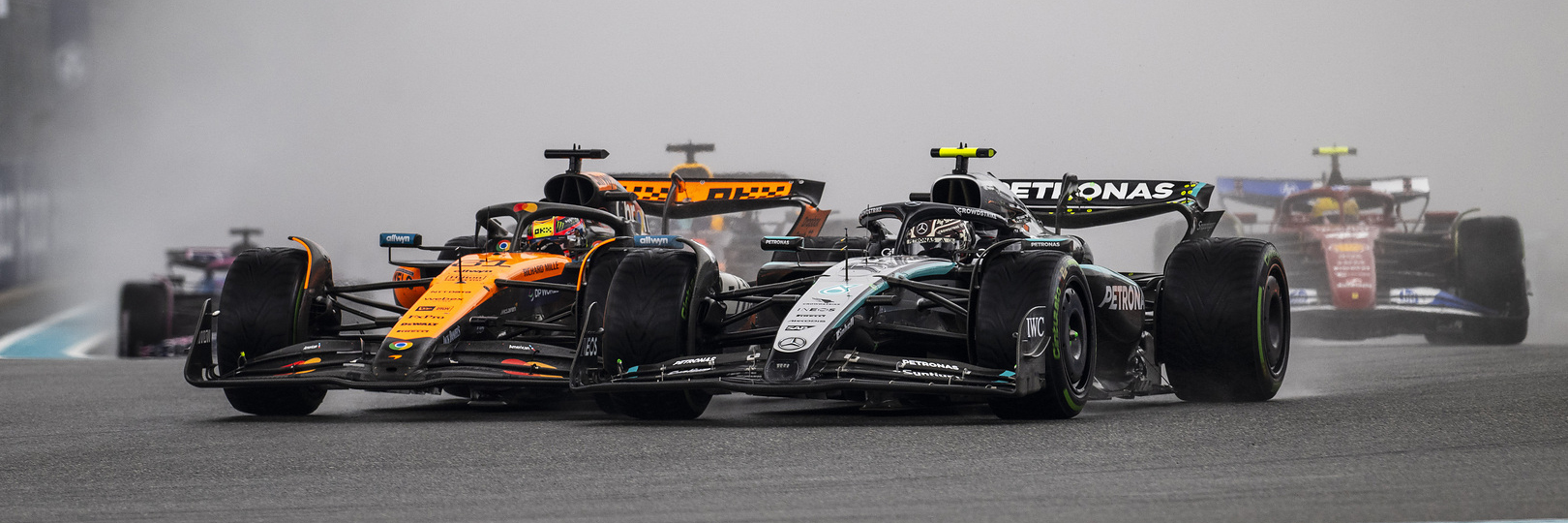
The F1 Sprint is a race run over 100km — roughly a third of a Grand Prix distance — lasting about 30 minutes.
The snappy format places the focus on flat-out racing, rather than strategy, with pit stops not being a necessity like in a Grand Prix.
That’s not to say tyre changes are banned, but in such a short distance, they rarely make sense for a faster overall race time.
F1 Sprint points system
The top eight drivers score points in the Sprint race:
- 1st: 8 points
- 2nd: 7 points
- 3rd: 6 points
- 4th: 5 points
- 5th: 4 points
- 6th: 3 points
- 7th: 2 points
- 8th: 1 point
These points count towards both the Drivers’ Championship and Constructors’ Championship.
When was the first F1 Sprint?
The F1 Sprint Race format debuted in 2021, with Silverstone hosting the very first Sprint Race in Formula 1 history. Initially, the results from the Sprint set the grid for the Grand Prix and only the top three scored points.
How does an F1 Sprint weekend work?
A traditional Formula 1 weekend has three practice sessions, one qualifying session, and the Grand Prix.
On a Sprint weekend, the schedule is significantly reshuffled:
- Friday: Free Practice 1, then Sprint Qualifying (SQ1, SQ2, SQ3) to set the Sprint grid.
- Saturday: The Sprint race replaces Free Practice 3, followed later in the day by Grand Prix Qualifying.
- Sunday: The Grand Prix main event.
The reduced practice time adds pressure. Teams have just one hour to perfect their set-up before competitive sessions begin.
That unpredictability is part of what makes Sprint weekends so entertaining. There’s little margin for error and heading in the wrong set-up direction can have big implications for the rest of the event.
What is Sprint Qualifying?
Sprint Qualifying takes place on Friday afternoon, replacing the second practice session. It’s split into three short segments, closely, but not exactly mimicking the regular qualifying format:
- SQ1: 12 minutes (bottom five eliminated)
- SQ2: 10 minutes (next five eliminated)
- SQ3: 8 minutes (top 10 battle for pole in the Sprint)
The result sets the grid for Saturday’s Sprint Race.
Does the Sprint affect the Grand Prix?
The Sprint is designed to be standalone, so its result does not decide the Grand Prix grid as it has in previous years. But there are exceptions:
- Grid penalties from the Sprint can carry over into the Grand Prix.
- Damage to the car can influence Sunday if major repairs or chassis changes are required.
- Reduced practice time makes it harder for teams to perfect their set-up, sometimes leading to upsets on Grand Prix day.
How many F1 Sprint events are there in 2025?
In 2025, six Grands Prix will feature the Sprint format:
- China: Shanghai (21–23 March)
- USA: Miami (2–4 May)
- Belgium: Spa-Francorchamps (25–27 July)
- USA: Austin (17–19 October)
- Brazil: São Paulo (7–9 November)
- Qatar: Lusail (28–30 November)
How many F1 Sprint events are there in 2026?
Once again, six Grands Prix will feature on the 2026 F1 Sprint calendar, including a return to Silverstone:
- China: Shanghai (13–15 March)
- USA: Miami (1–3 May)
- Canada: Montreal (22–24 May)
- Great Britain: Silverstone (3–5 July)
- Netherlands: Zandvoort (21–23 August)
- Singapore: Marina Bay (9–11 October)
Who has won the most F1 Sprint races?
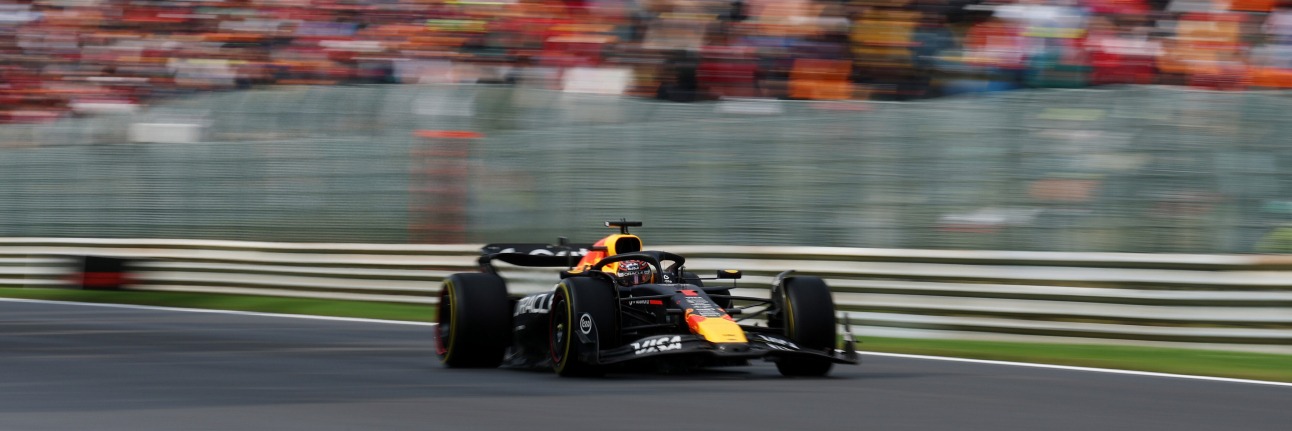
Unsurprisingly, Max Verstappen tops the list. The three-time World Champion has taken 12 Sprint victories, more than any other driver.
Lando Norris, Oscar Piastri and Valtteri Bottas are tied for second on that list with just two wins apiece.
Who won the last F1 Sprint?
The most recent Sprint took place at Spa-Francorchamps in 2025, and it was Max Verstappen who once again came out on top.