

Japanese Grand Prix: Key F1 talking points
24 March 2026Round 3 of the 2026 Formula 1 season heads to one of the most historic and revered venues in motorsport, as the 2026 Japanese Grand Prix takes centre stage at Suzuka.
After an unpredictable start to the season in Melbourne and Shanghai, the competitive order has taken shape. But Suzuka presents an entirely different challenge – a fast and flowing circuit where overtaking opportunities are at a premium.
With the field still adjusting to regulation changes, this weekend could offer the clearest indication of what racing in 2026 might look like.
Here are the key talking points ahead of the 2026 Japanese Grand Prix.
Japanese Grand Prix 2026: Race essentials
- Venue: Suzuka International Racing Course, Suzuka
- Round: Round 3 of the 2026 F1 World Championship
- Weekend format: Grand Prix weekend (no Sprint)
- Race start time: 06:00 (GMT)
- Key challenge: Limited overtaking opportunities
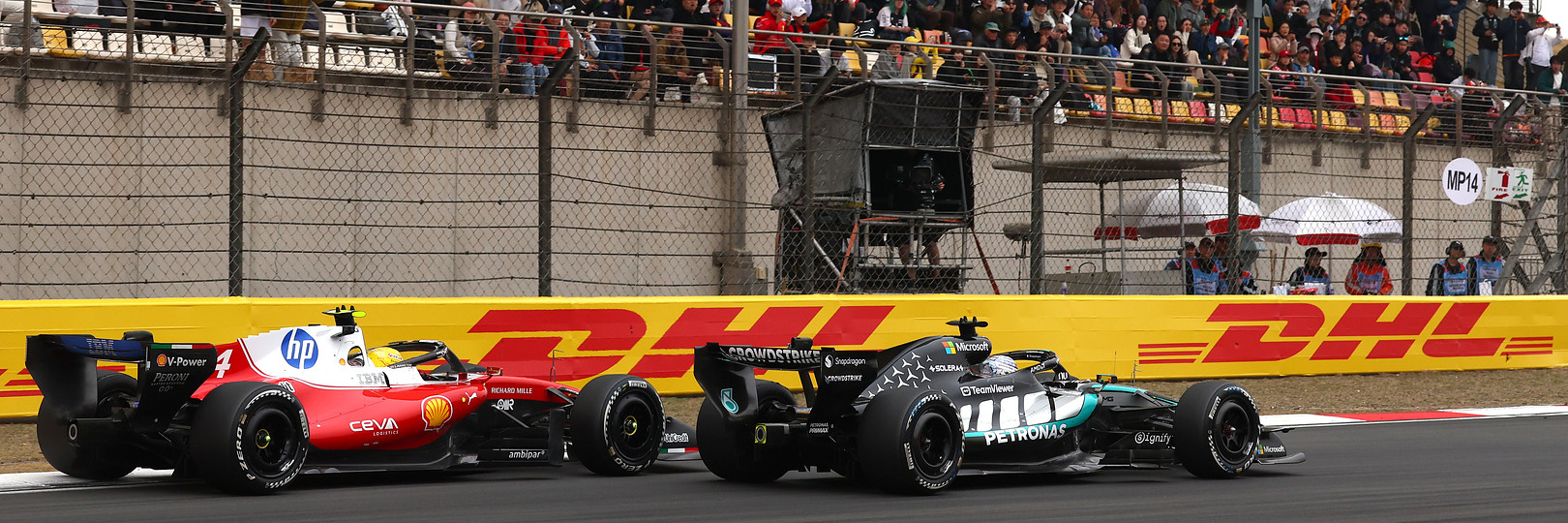
Ferrari vs Mercedes continues
Suzuka is a very different beast compared to the season’s opening rounds. Its flowing, technical layout rewards aerodynamic balance and driver confidence, while incredibly punishing for even the simplest mistake.
Overtaking is notoriously difficult here, which could play directly into Ferrari’s hands. The Scuderia’s strong starts in the opening races have allowed them to gain track position early, and at a circuit where clean air is king, that advantage could be even more decisive.
Can Red Bull and Verstappen turn things around?
Suzuka has been kind to Max Verstappen in the past, including a commanding early-season victory here in 2025. But Red Bull arrives in Japan still searching for answers in its new package.
The RB26’s raw pace has been difficult to read so far in 2026, but it appears closer to the Haas and Alpines of the grid rather than the Mercedes and Ferrari, which certainly isn’t somewhere a four-time world champion would want to be.
Verstappen’s aggressive driving style has already been a talking point under the new regulations, and at a circuit that demands rhythm and precision, that could compound Red Bull’s woes.
Can Haas continue to lead the midfield fight?
One of the early surprises of the 2026 season has been Haas’ emergence as a genuine best of the rest contender.
Ollie Bearman has been particularly impressive, finishing seventh in Melbourne, eighth in the Shanghai Sprint, and fifth in the Chinese Grand Prix. Those results point to a car that is not only quick, but consistent across different circuits.
But as is the case for the rest of the field, Suzuka will demand more from the car and the drivers, so may shed some light on how good its 2026 car truly is.
What to watch for on race day in Suzuka
Suzuka’s unique layout should limit the emphasis on energy deployment – as has been the case in Melbourne and Shanghai – and heighten the focus on car balance.
That could generate very different results to the opening two rounds, and place greater importance on track position. But things might be different for the 2026 cars. Only time will tell.
Japanese Grand Prix Practice 1 results
It was no surprise that the Mercedes duo of George Russell and Kimi Antonelli were quick out of the blocks on Friday at Suzuka. The Brit got the better of his Italian team-mate by just two-hundredths of a second to be fastest. Lando Norris and Oscar Piastri followed close behind, then came the Ferrari drivers of Charles Leclerc and Lewis Hamilton.
Pos | Driver | Team | Time/Gap | Laps |
1 | George Russell | Mercedes | 1:31.666 | 27 |
2 | Kimi Antonelli | Mercedes | +0.026s | 26 |
3 | Lando Norris | McLaren | +0.132s | 20 |
4 | Oscar Piastri | McLaren | +0.199s | 23 |
5 | Charles Leclerc | Ferrari | +0.289s | 25 |
6 | Lewis Hamilton | Ferrari | +0.374s | 23 |
7 | Max Verstappen | Red Bull Racing | +0.791s | 27 |
8 | Liam Lawson | Racing Bulls | +0.863s | 27 |
9 | Esteban Ocon | Haas F1 Team | +0.935s | 23 |
10 | Arvid Lindblad | Racing Bulls | +0.999s | 29 |
11 | Gabriel Bortoleto | Audi | +1.093s | 27 |
12 | Nico Hulkenberg | Audi | +1.132s | 26 |
13 | Isack Hadjar | Red Bull Racing | +1.137s | 27 |
14 | Oliver Bearman | Haas F1 Team | +1.234s | 27 |
15 | Pierre Gasly | Alpine | +1.312s | 25 |
16 | Franco Colapinto | Alpine | +1.695s | 24 |
17 | Carlos Sainz | Williams | +1.717s | 26 |
18 | Alexander Albon | Williams | +2.031s | 22 |
19 | Sergio Perez | Cadillac | +2.555s | 18 |
20 | Valtteri Bottas | Cadillac | +2.824s | 24 |
21 | Lance Stroll | Aston Martin | +3.628s | 22 |
22 | Jak Crawford | Aston Martin | +4.696s | 11 |
Japanese Grand Prix Practice 2 results
Piastri led the way in the second practice session less than a tenth clear of Antonelli, who, in turn, was a tenth ahead of Russell. Norris followed half a second behind his McLaren team-mate while the Ferraris still looked to be off the pace in fifth and sixth.
Pos | Driver | Team | Time/Gap | Laps |
1 | Oscar Piastri | McLaren | 1:30.133 | 29 |
2 | Kimi Antonelli | Mercedes | +0.092s | 28 |
3 | George Russell | Mercedes | +0.205s | 29 |
4 | Lando Norris | McLaren | +0.516s | 17 |
5 | Charles Leclerc | Ferrari | +0.713s | 28 |
6 | Lewis Hamilton | Ferrari | +0.847s | 27 |
7 | Nico Hulkenberg | Audi | +1.308s | 27 |
8 | Alexander Albon | Williams | +1.363s | 30 |
9 | Oliver Bearman | Haas F1 Team | +1.365s | 28 |
10 | Max Verstappen | Red Bull Racing | +1.376s | 29 |
11 | Esteban Ocon | Haas F1 Team | +1.399s | 30 |
12 | Liam Lawson | Racing Bulls | +1.457s | 31 |
13 | Carlos Sainz | Williams | +1.475s | 30 |
14 | Pierre Gasly | Alpine | +1.601s | 29 |
15 | Isack Hadjar | Red Bull Racing | +1.626s | 29 |
16 | Gabriel Bortoleto | Audi | +1.800s | 11 |
17 | Franco Colapinto | Alpine | +2.305s | 28 |
18 | Valtteri Bottas | Cadillac | +2.482s | 28 |
19 | Fernando Alonso | Aston Martin | +3.463s | 24 |
20 | Sergio Perez | Cadillac | +3.556s | 14 |
21 | Lance Stroll | Aston Martin | +3.818s | 21 |
22 | Arvid Lindblad | Racing Bulls |
| 1 |