

Silverstone's Ultimate Guide to the FIA Formula 3 Championship
01 October 2025FIA Formula 3 is a junior racing series on the ladder to Formula 1. Learn more about the championship with Silverstone’s ultimate guide to F3.
The FIA Formula 3 Championship, or F3, is a global racing championship on the Formula 1 feeder series ladder which sees some of the biggest junior talents in motorsport complete on a worldwide stage, showcasing their speed, skill and success to Formula 1 teams and fans alike. The championship allows them to develop their racecraft as they prepare for the next stage in their career on the road to Formula 1, the global pinnacle of motorsport.
If a driver is successful in F3, the next logical step on the pathway to F1 is Formula 2, with many current Formula 1 drivers passing through each championship on their way to the top.
Launched in 2019, the FIA Formula 3 Championship was the result of a merger between two third-tier single-seater racing championships: the GP3 Series and the FIA Formula 3 European Championship.
Since 2019, Silverstone has been a staple calendar on the F3 calendar, even during the COVID pandemic in 2020, when the Home of British Motorsport held two racing rounds of the championship alongside the British Grand Prix and the 70th Anniversary Grand Prix.
F3 will be returning to Silverstone in 2026. To prepare you for plenty of on-track excitement at next year’s British Grand Prix, we created this ultimate guide to the FIA Formula 3 Championship to make sure you’re in pole position and ready to cheer on the next generation of racing drivers.
What are the routes into FIA Formula 3?
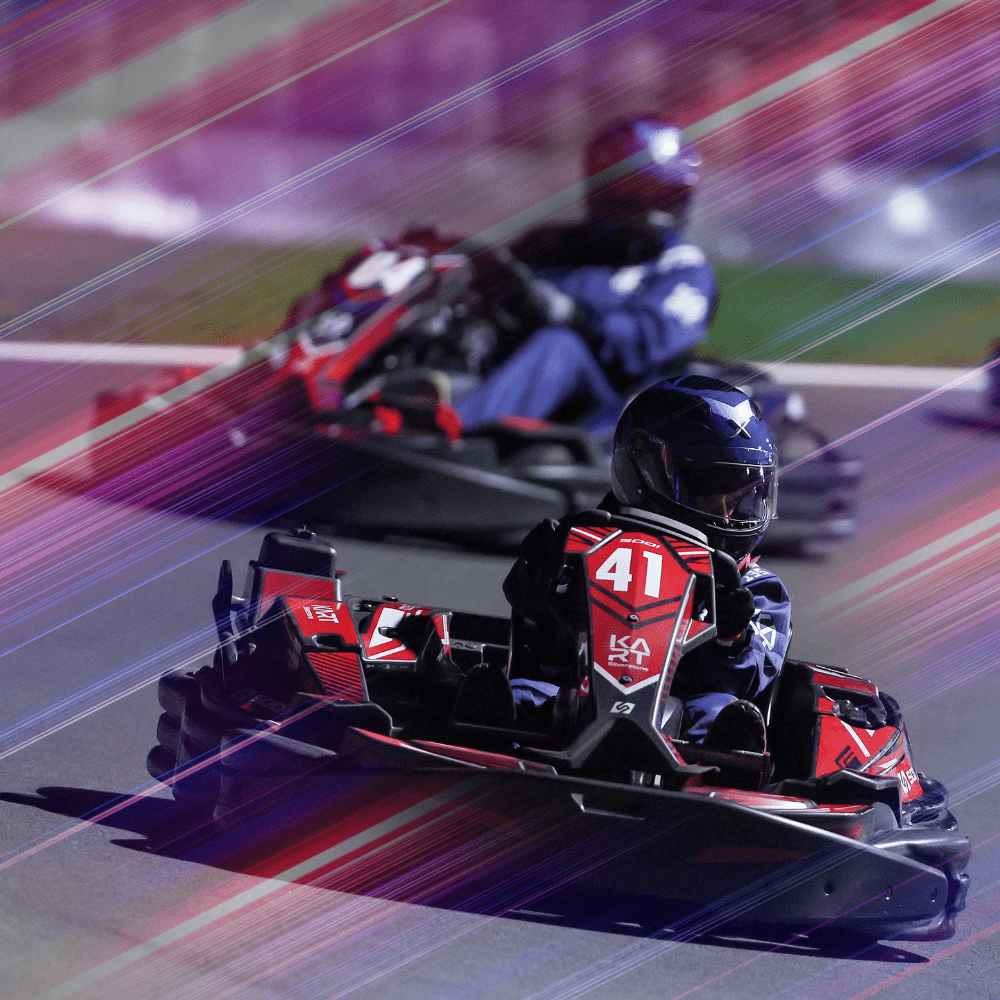
Racing drivers tend to begin their career in go karts, often from a young age. However, you don’t always need to be extremely young to begin your karting career, with some racing drivers who’ve passed through the F3 championship, like Olli Caldwell, beginning their careers later than usual.
F3 is an early step in a driver’s junior career. Sometimes, drivers may have a stint in closed wheel racing, like British Grand Prix race winner Lando Norris, who competed in Ginetta Juniors before making the full-time change to single seaters. Other young British drivers who took this route include the likes of Zak O’Sullivan, who also competed in the Ginetta Junior Championship before making his F3 debut with Carlin, now Rodin Motorsport, and Joseph Loake, who raced in the BRSCC Fiesta Junior Championship before his F3 stint, also with Rodin.
Who are the teams in FIA Formula 3?
Across 10 of the most successful teams in junior motorsport, 30 racing drivers compete in the FIA Formula 3 Championship. These teams include PREMA Racing, Trident, ART Grand Prix, Campos Racing, Hitech TGR, MP Motorsport, Van Amersfoort Racing, Rodin Motorsport, AIX Racing and DAMS Lucas Oil, and each team enters three cars per round.
The FIA Formula 3 season structure
Racing teams, and not just in the junior categories but in Formula 1 too, are constantly looking at the up-and-coming talent. They are constantly checking results and race skill whilst considering who to approach to join their team for the following season. Alternatively, with the support of their management, racing drivers may approach F3 teams and begin discussions about competing together in the championship.
Even though 30 seats seems to bring plenty of opportunity for the racing drivers who are raring to go and show their talent to their world as they chase their Formula 1 dream, the spots fill up quickly. Often, teams and drivers are engaging in conversations for the following season ahead of the summer break.
In Formula 3, however, drivers have to pay for their own seat. They are not paid to race for their team, and instead, with their own financial backing, whether from the support of an F1 team, sponsors or their family, drivers must pay for their spot in the series. Motorsport is an expensive sport, with seats costing upwards of £1 million.
In F3, drivers are not limited to a certain number of seasons in the championship. If they don’t move up to Formula 2, they can continue in F3 – as long as they have the funds to do so – or they can move to another racing category elsewhere in the world, which is becoming the more common option.
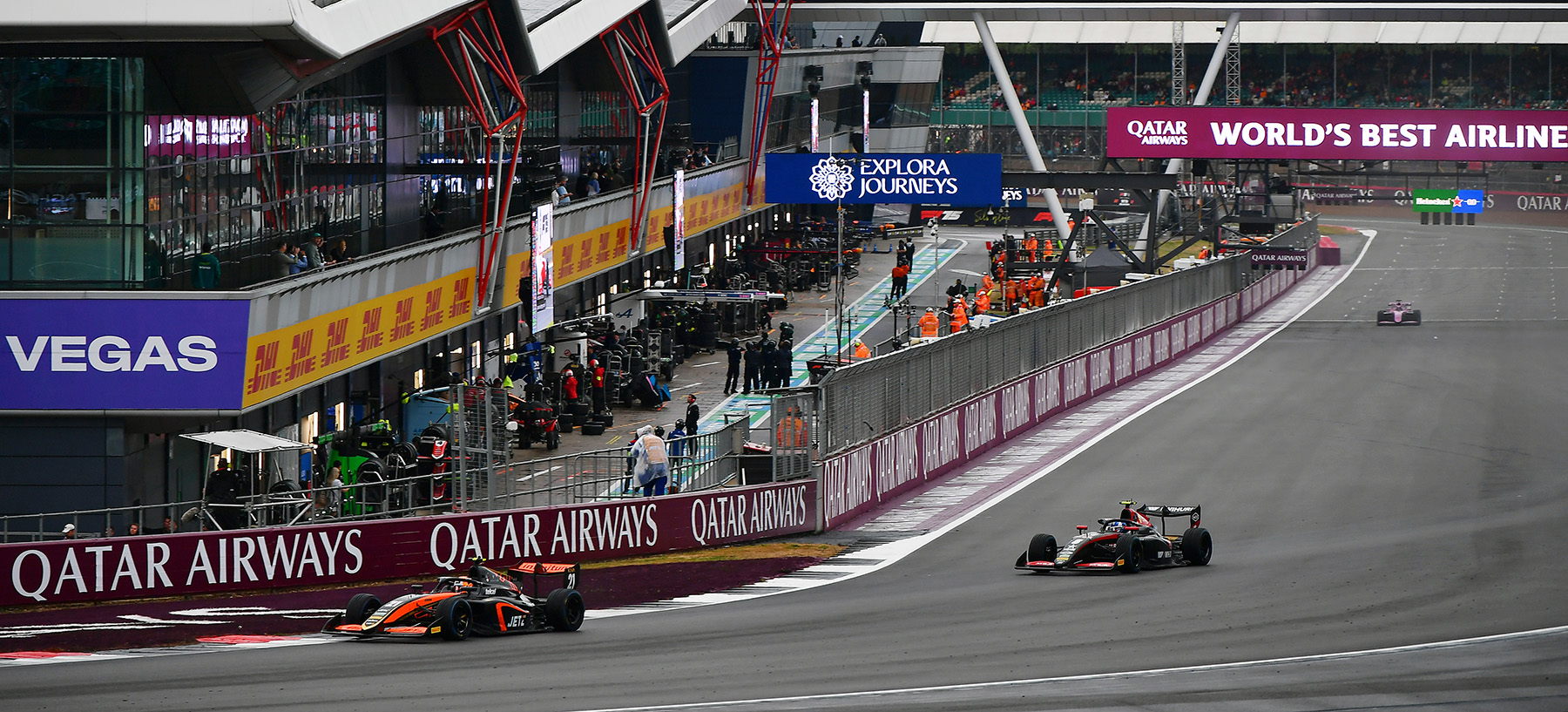
After pre-season testing, usually held in February, the Formula 3 race season kicks off in March. Across 10 rounds, there are two races per event – the Sprint Race and the Feature Race – meaning there are a total of 20 races in a full F3 season.
In 2025, there were 10 rounds held across the world, including in Melbourne, Bahrain, Monaco, Silverstone and the final race of the season at Monza.
For 2026, F3 drivers will go racing at 10 rounds again at these circuits, with the key changes being Imola leaving the calendar and the brand-new street circuit in Madrid coming in for the final race of the year.
F3 races exclusively on Formula 1 race weekends, meaning at its 10 championship rounds in a season, it features on Friday, Saturday and Sunday ahead of F1 sessions. The F3 season typically runs from March through to September at select races on the calendar in Europe, the Middle East, and since 2023, at the Australian Grand Prix.
The F3 calendar is designed to test drivers around the circuits they are likely to be most familiar with from their experience in both open and closed wheel lower categories, but also to assess their abilities to learn new tracks, too.
FIA Formula 3 race weekend structure
Like F1, a Formula 3 race weekend is held across three days – typically Friday, Saturday and Sunday.
On Friday, the only Practice session is held. For 45 minutes, the teams and drivers have a chance to acclimatise themselves to the circuit and consider their setups for the weekend. A 30-minute Qualifying session is held later on a Friday, where drivers battle it out to take Pole position for Sunday’s Feature Race. The grid for Saturday’s Sprint – where drivers race for 40 minutes plus one lap – is decided by reversing the top 12 fastest drivers from Qualifying, meaning the driver who set the fastest time overall will start from P12 in the Sprint, but return to the front of the grid for Sunday’s Feature Race.
Sunday hosts the final race of the F3 race weekend. Held before the Formula 1 Grand Prix, the Feature Race is a 45-minute race plus one lap where the most points are available.
In F3, points are awarded on all three days of on-track running.
Unlike in F1, points are given to the polesitter for the Feature Race, meaning on Friday, two points will be awarded to the driver who has the fastest time at the end of the Qualifying session.
In the Sprint Race, the top 10 classified drivers are awarded points. The winner of the race will receive 10 points, the second-place driver will receive 9 points and so on, to the driver finishing in P10 receiving one point.
Sunday’s Feature Race follows the same points system as F1, with the winner taking 25 points. From P2 to P10, drivers will score 18, 15, 12, 10, 8, 6, 4, 2 and 1 points respectively.
In each race, the driver who achieves the fastest lap time will be awarded an extra point, provided they are in one of the top 10 positions in the final race classification.
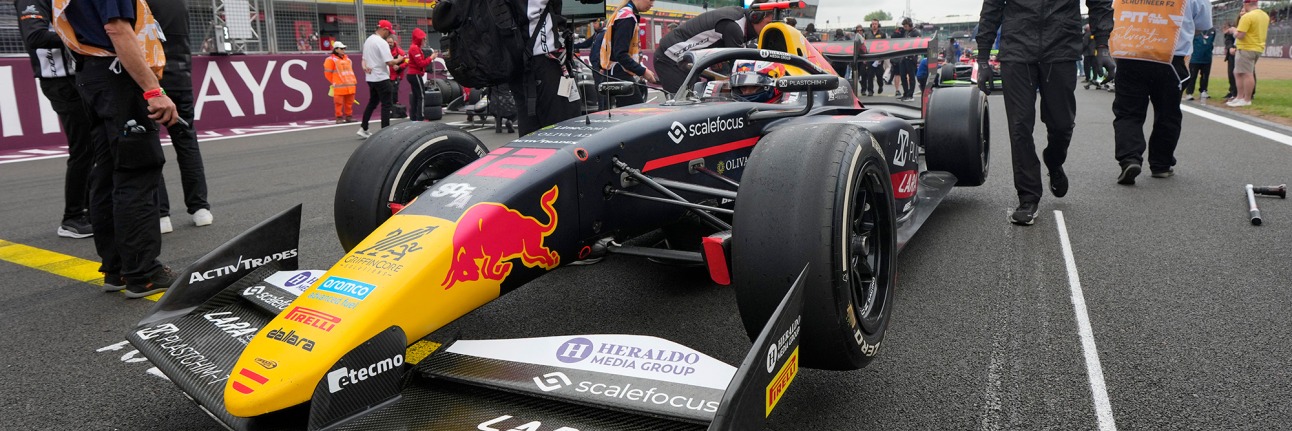
The FIA Formula 3 car
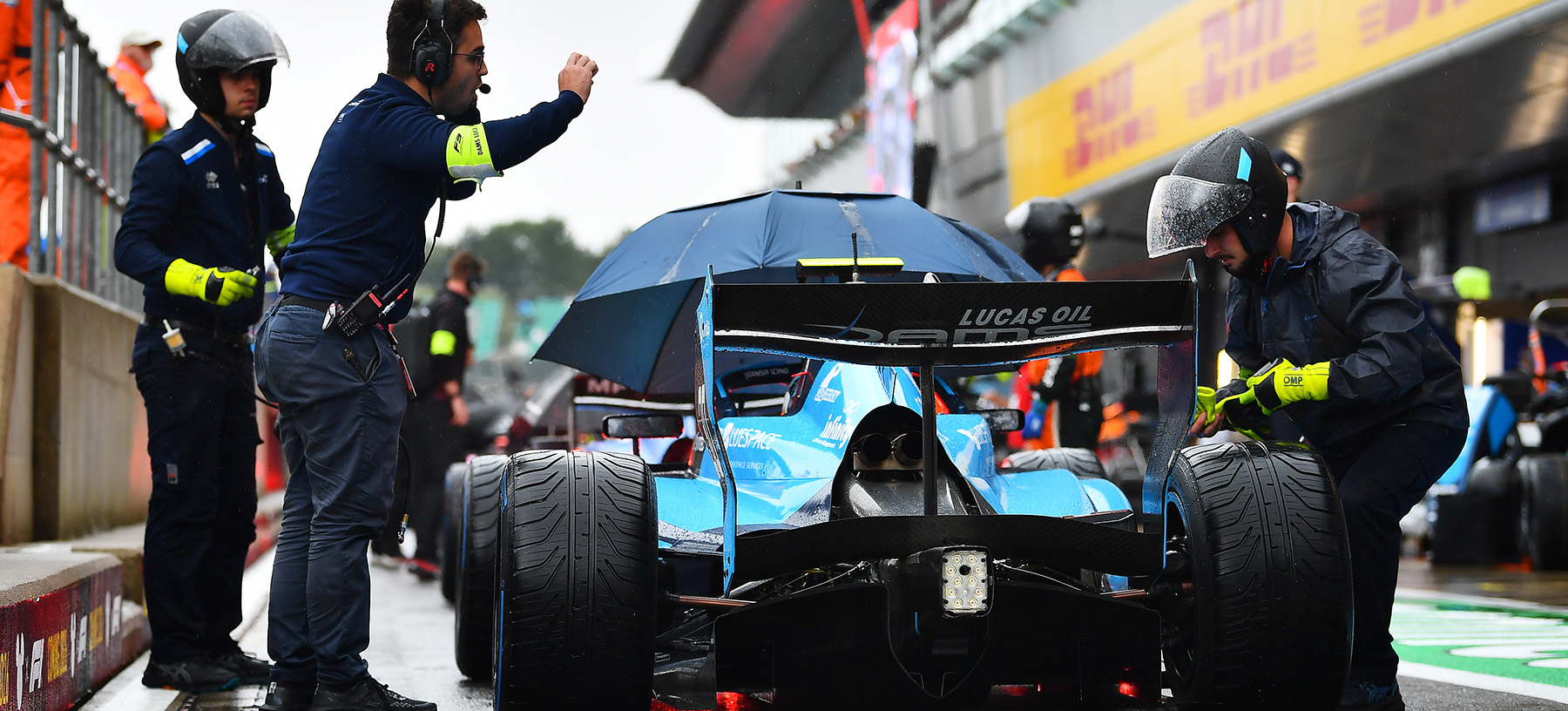
The chassis of a Formula 3 car is designed by Dallara Automobili and the engine is a bespoke Mecachrome 6-cylinder 3.4 litre naturally aspirated 380 horsepower @ 8000 rpm.
The aerodynamics of a Formula 3 car are optimised to facilitate overtaking, with very low ride height sensitivity and a wide range of suspension set-up possibilities. The car also has a steel halo for driver safety, has DRS and F1-style VSC and marshalling system and runs on advanced fuel which meets the FIA’s 100% sustainable fuel standard. With a top speed of up 300 km/h (186mph), a Formula 3 car is still incredibly fast, despite being a feeder series category.
F3 cars use 16-inch Pirelli tyres, with three specific compounds designed and developed for Formula 3 to provide the most suitable compound for every circuit. As per the sporting regulations, each driver is allocated four sets of dry-weather tyres and two sets of wet-weather tyres per event. Unlike in F1, pit stops are not mandatory in F3; they are optional if there is a major event during a race, like a change in weather conditions or tyre punctures which require a tyre change, or if damage is sustained to the front or rear wing.
F3 teams can change their cars by adjusting the setup, like changing aerodynamic settings, suspension and tyre pressure to optimise the car for specific tracks and conditions, but since each driver has the same specification chassis from Dallara, teams cannot make major modifications to the car’s fundamental components.
The route to becoming FIA Formula 3 champion
The FIA Formula 3 Champion is crowned as the driver who earns the most points from pole positions, sprint and feature races, and fastest laps, throughout a season.
From the 2025 season onwards, the five highest placed drivers in the F3 Drivers’ Championship will be awarded from a million-euro prize fund. The fund will be split so that the Champion receives €300,000, the second placed driver receives €250,000, the driver in third receives €200,000 and the driver in fourth and fifth receive €150,000 and €100,000 respectively. The prize requires these top five drivers to be racing in FIA Formula 2 for the following season, or it will be awarded to the next-highest placed driver(s). This prize fund is awarded in addition to the existing Pirelli €300,000 prize awarded to the F3 Champion.
Previous FIA Formula 3 Champions: where are they now?
Since its first season in 2019, the FIA Formula 3 Championship has produced a wealth of champions who have experienced Formula 1.
The winner of the inaugural season was Robert Shwartzman, who currently competes in INDYCAR with PREMA, the same team he won his F3 title with. Shwartzman has taken part in F1 young driver tests and was a member of the Ferrari Driver Academy, which provided him with the role of test driver for the Scuderia. Then, he was promoted to Ferrari reserve driver and has competed in several free practice sessions with Ferrari and even Kick Sauber.
Oscar Piastri became the second FIA Formula 3 Champion in 2020 after a close final race of the season at the Autodromo Internazionale del Mugello in Italy. Now in Formula 1 with McLaren, Piastri is battling with his teammate Lando Norris for his first F1 World Championship and has a total of nine race wins in his F1 career so far.
Dennis Hauger won the 2021 Championship. He competed in Formula 2 from 2022 to 2024 and was also a member of the Red Bull Junior Team from 2017 to 2023. Since winning the championship, he has made his Formula E debut at the 2024 Berlin rookie test and moved across the Atlantic to the USA to compete in Indy NXT with Andretti Global for 2025. Hauger won the championship, and in 2026, will become an IndyCar driver with Dale Coyne Racing. He will become the first Norwegian IndyCar driver in 109 years.
The 2022 F3 Championship was won by Victor Martins, who moved to F2 after his win and, as part of the Alpine Academy, made his F1 test debut in Monza. Now part of the Williams Driver Academy for 2025, Martins made his free practice debut at the Spanish Grand Prix in 2025 and has also competed in the Formula E rookie test, the World Endurance Championship and the 2025 Race of Champions, where he won the Nations Cup for Team France with his teammate Sébastien Loeb.
The 2023 FIA F3 Champion was Gabriel Bortoleto, who moved up to Formula 2 after his win – a championship which he also secured. He became the fourth champion in the FIA Formula 2 era to win the F3 and F2 titles in successive years, and as of 2025, he is racing in Formula 1 with the Kick Sauber – becoming Audi for 2026 – team on a multi-year deal. Bortoleto claimed his maiden points finish in F1 at the Austrian Grand Prix.
2024 Champion Leonardo Fornaroli was the first driver to win the title without any race wins. Currently, Fornaroli is racing in F2 and is leading the Championship.
This year’s F3 season ended in Monza, but the 2025 Champion Rafael Câmara, was crowned at the penultimate round of the season in Hungary after winning the feature race.
Several other current F1 drivers have passed through the Formula 3 category on their journey to the top. Since the first season in 2019, eight drivers have competed in F3 before stepping up to F1, including Yuki Tsunoda, Isack Hadjar and Jack Doohan.
Formula 3 drivers have endless opportunities after their stint in the junior category. From reaching F1 or moving overseas to competing in other racing championships like endurance or GT racing, F3 opens doors to limitless possibilities which propel racing drivers to their professional racing career.
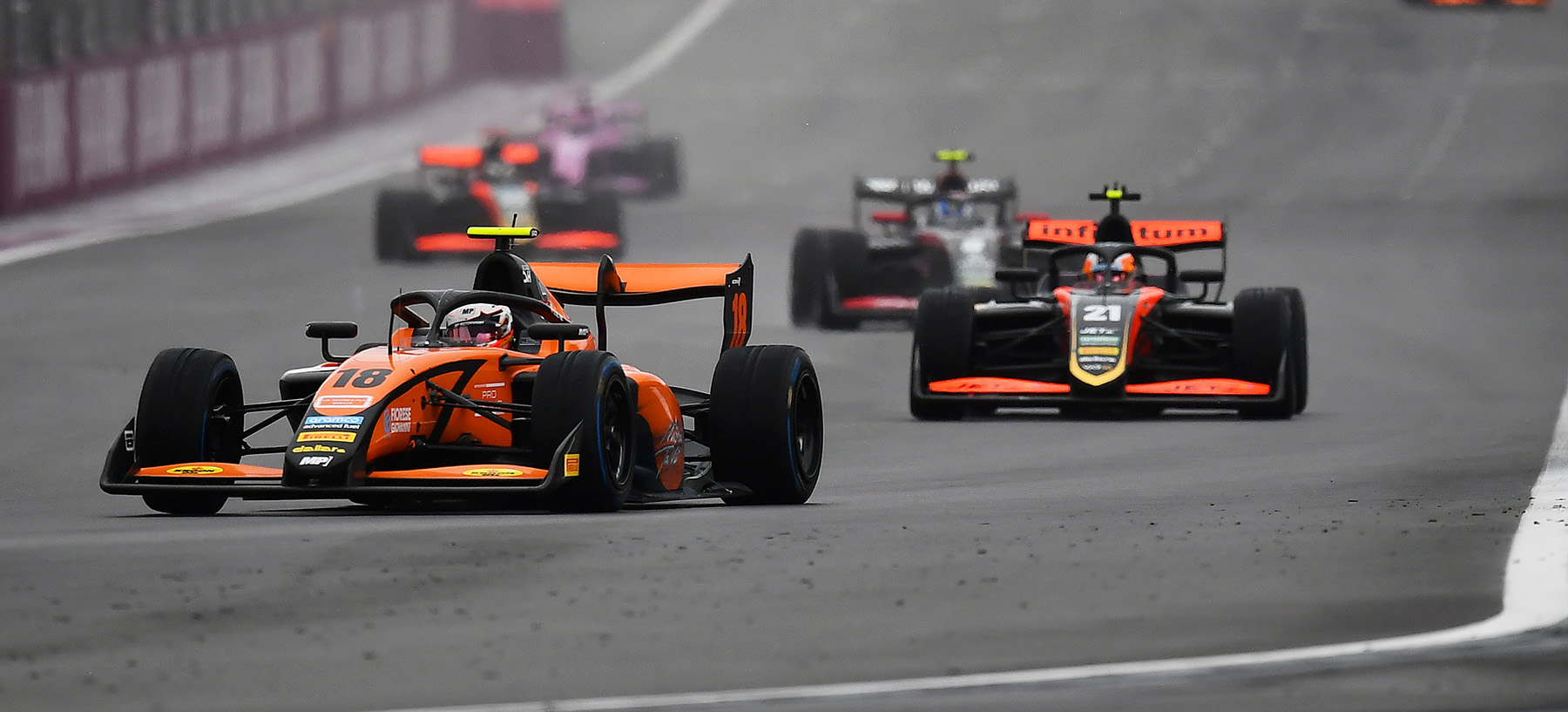
Although the category has some similarities to F1, including the DRS system and points scoring system for Sunday’s Feature Race, Formula 3 is designed to be a stepping stone on the ladder to the pinnacle of motorsport. Its purpose is to advance young drivers and support them as they hone their skills and racecraft to help them in their future career.