End of an Era: The Closing Stages of Current Regulations in Formula 1
01 September 2025As the final half of the 2025 season draws closer, so does the end of the 2022-2025 regulations, preparing for a massive shift for 2026.
The current regulations brought a shake-up to the team order, saying goodbye to the dominance of the Silver Arrows and trading it for a reignition of hopes for Ferrari, a Victory for Red Bull, and a resurgence for McLaren.
2022’s focus was on bringing cars closer together, improving the on-track action that had been slipping away as teams settled into their development. With new aerodynamic rules, ground effect cars and larger wheels, the overhaul presented an opportunity and challenge to many on the grid.
Biggest challenges
But with such large untested changes came struggles for some of the sport’s biggest names. Porpoising quickly became the talk of the grid. With the new aerodynamics, the cars were lower to the ground than ever. When the cars were too low, some bounced, bottoming out, which led to many drivers complaining about the pain after races.
Mercedes suffered loudly from porpoising. From videos of Lewis Hamilton struggling to climb out of the W13 to Toto Wolff formally complaining about the regulations to the FIA. Beyond the comfort issue for drivers, the porpoising greatly affected the performance of the cars, with the W13 being a far cry from the Constructor’s Championship winner of the year before.
But Mercedes' woes didn’t end with porpoising. With a unique sidepod design, the Silver Arrows found themselves struggling in all areas in comparison to the other top teams. For the first time since the Hybrid Era began, the Brackley-based team has not found themselves in contention for a championship.
The team found some stability in the colder climates, a feature that is still prominent in the 2025 season. However, choosing the wrong direction from the outset of the regulations put the team on the back foot. Something that has left them permanently a step behind throughout this set of regulations.
The one area in which Mercedes triumphed over the rest of the grid was reliability. While the Silver Arrows suffered very few mechanical DNFs in the early stages of the regulations, the rest of the grid was not so lucky.
Ferrari engines were the largest victims of mechanical DNFs. Though they managed to solve the issues as the seasons progressed, 2022 was a year of Ferrari and customer teams suffering from engine fires and unreliability. The prancing horses were missing out on many strong results due to mechanical disasters.
The ups and downs
Many teams took advantage of the changing order and surged forward. Red Bull and Aston Martin were some of the biggest winners as the regulations were introduced.
2023 brought the Silverstone-based team from the back of the field onto the podium. With Fernando Alonso returning to the front of the field for the first time in years. Throughout testing, their performance was watched with hesitation, but from the opening round of the season, they managed to use their raw pace to achieve eight podiums.
For Aston Martin, their downfall came in development. Where Ferrari, Mercedes and McLaren progressed while the Silverstone team struggled to keep up. Even as the year came to a close and Aston Martin fell down the order, it was still the strongest season for the team to date.
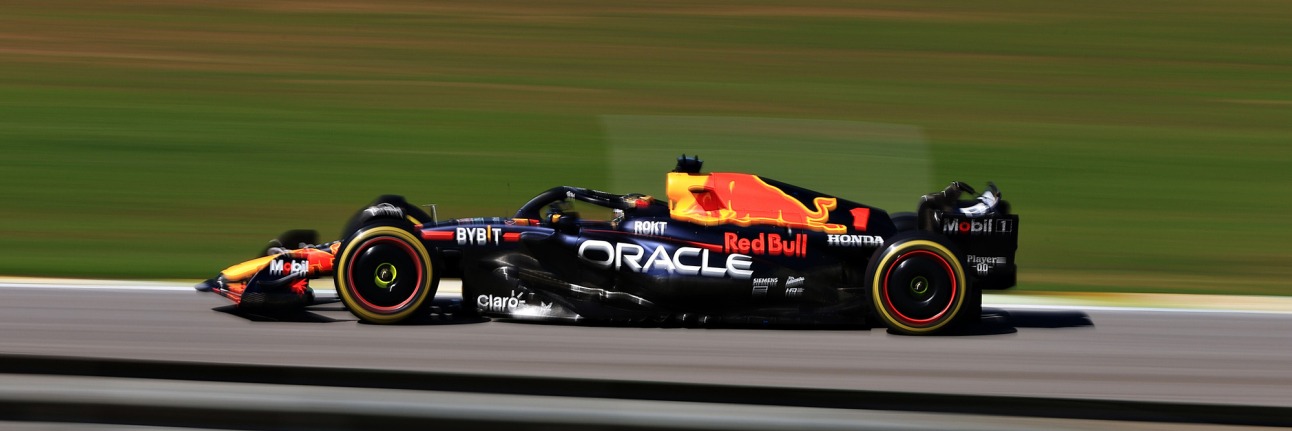
Nothing came close to the dominance that Max Verstappen and Red Bull exhibited. From the end of 2022, well into 2024, Red Bull and Verstappen seemed unbeatable. With continued advancements on the RB18 came the RB19 for the 2023 F1 season.
Winning all but one race, the RB19 ended the year as the most successful car in the history of the sport, with Max Verstappen able to break Sebastian Vettel’s record of the most consecutive wins. The performance coming from the aerodynamic package, combined with a power unit which was reliable, made the RB19 the most complete car.
Their struggles came from moving in the wrong direction towards the end of 2024. With such a margin to the rest of the field, the decision didn’t affect them for much in 2023 and only became prevalent as McLaren and Ferrari began to catch the Dutchman. Alongside the struggles from Verstappen’s teammates, which highlighted issues within the team that Verstappen was able to work through.
The winners
McLaren are the biggest example of how development became vital in this era of regulations. In the early days of 2022, McLaren sat at the bottom of the field, the team struggling to find any level of stability in the new regulations.
However, as the season went on, they seemed to take steps further up the grid, fighting with Alpine in the Constructors' for the title of ‘best of the rest’. In Imola, Lando Norris became the only driver not from a top-three team to make it onto the podium.
From there, it was a steady climb for the papaya team. In 2023, the team claimed nine podiums, ending the season another step up in the Constructors’ championship. Under the cloud of Red Bull’s record-breaking season, McLaren were setting the foundations for what was going to be a shocking resurgence through the field.
2024 was a game-changer. Red Bull's dominance faded away as the season progressed, and between Lando Norris and Oscar Piastri, the team collected six wins and 21 podiums. Beyond the on-paper results, it ended the season as the fastest car on the grid by a comfortable margin. Which they held onto well into the 2025 season.
Their progression highlights both the benefits and downfalls of these regulations. When the grid found itself closer together, in 2022 or 2024, the fighting was exciting, and the order shifted quickly, with everything seemingly to play for. Qualifying sessions are closer than ever, the margin growing smaller. One tenth can often mean the difference not just between pole but making it into Q3.
However, the order also settles with team dominance, first Red Bull and then McLaren. Dirty air is still the greatest weakness, and once out front, it is harder and harder to overtake – especially when the car in front is the fastest car on the grid.
2026 looks to aid this, with smaller and lighter cars with active aerodynamics and a simpler power unit, all aiming to produce closer racing using more electrical power and less downforce.