
F1 flags explained: An F101 beginner’s guide to every flag in Formula 1
24 September 2025Formula 1 drivers have plenty to think about while picking a braking point at 200mph – they are constantly assessing things like tyre strategy, overtaking opportunities and much more – but there’s another crucial part of their job: instantly recognising what the trackside marshals are communicating to them with a range of different flags and panels around the circuit.
Flags in F1 are the universal language of racing, signalling everything from a slippery track to a race-stopping incident. If you’re new to the sport, this guide breaks down every F1 flag and what it means, so you’ll never be left wondering why a driver suddenly slowed down or moved aside.
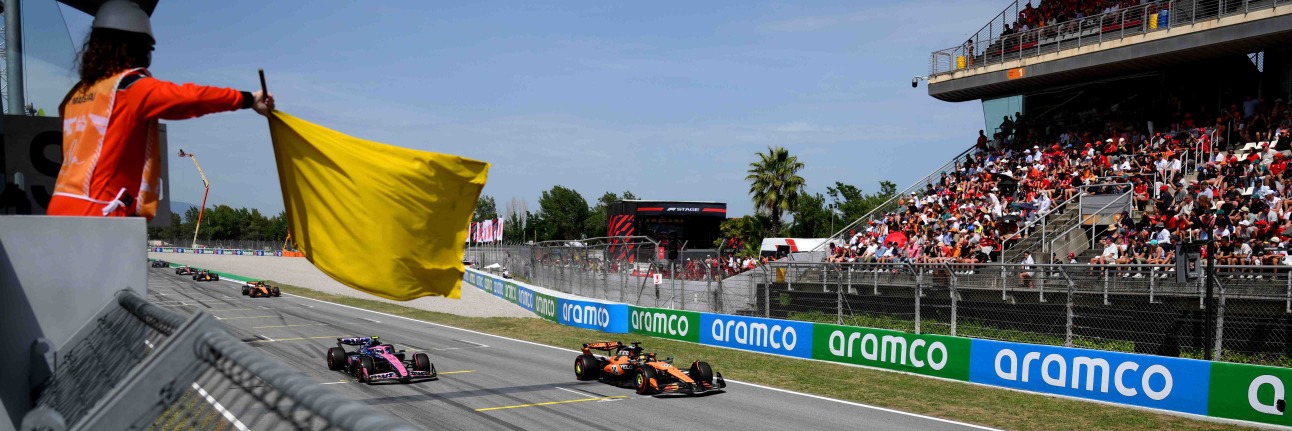
Yellow flag
A warning of danger or track obstruction that comes in two levels:
- Single waved yellow: There is a potential hazard at the side of the track. Slow down. No overtaking and be ready to change direction. A driver must be able to prove that they have slowed sufficiently in a sector where a single yellow flag is waved.
- Double waved yellow: A hazard is blocking the track or there are marshals working on it. Drivers must reduce their speed by a significant amount and be ready to stop at any point. There is no overtaking allowed.
In practice and qualifying, drivers must abandon their lap if yellow flags are out. No pushing for purple sectors after you’ve seen a yellow flag.
Where are yellow flags most common?
Yellow flags are more frequent at street circuits due to the limited space in run-off areas.
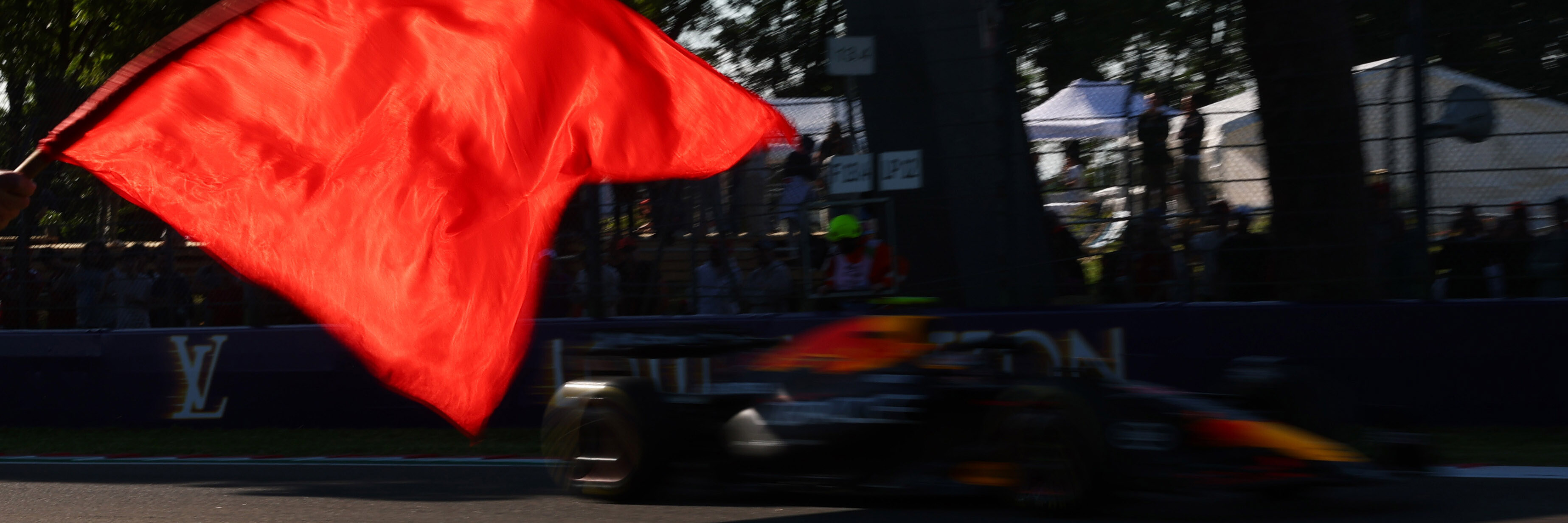
Red flag
One of the most serious signals a driver can see out on track – the red flag instantly stops all track activity and is waved at every marshal’s post simultaneously. It can be shown due to accidents, poor weather or unsafe conditions.
- In practice and qualifying: drivers must slow down and return to their garage.
- In the race: drivers line up in the pit lane and wait for further instructions.
Most red flags in one session
Qualifying for the 2025 Azerbaijan Grand Prix recently broke the record for the most red flags in a single session with six.
Most red flag restarts in a race
In 2023, the Australian Grand Prix was halted by red flags and restarted a total of three times, taking the record for the most red flags in a single race.
Green flag
The green flag means the track is clear. You’ll see it at the start of practice and qualifying or after an incident has been dealt with and yellow flag conditions have ended. In short, racing conditions are back to normal.
Blue flag
The most debated flag in F1 is known for its use when backmarkers are being lapped, but its meaning changes between different sessions during a weekend:
- Leaving the pits: warns of faster traffic approaching.
- In practice: It tells a slower driver to let a faster car on a flying lap through.
- In the race: Shown to lapped cars, instructing them to move aside for the leaders. Ignoring three consecutive blue flags earns a driver a penalty.
Yellow and red striped flag
Stationary and striped, this flag warns of slippery conditions ahead. This could be oil or water, affecting grip levels.
White flag
Indicates a slow vehicle ahead. Common at the end of practice sessions when cars are performing practice starts, but it can also mean a damaged car moving slowly.
Code 60 / Full Course Yellow / Virtual Safety Car
When the Race Director needs to neutralise a section of the track, or indeed all of it, they have a number of tools at their disposal:
- Code 60 (purple with white 60): All cars limited to 60 km/h.
- FCY (Full Course Yellow): A fixed speed limit applies everywhere.
- VSC (Virtual Safety Car): Drivers must stick to a delta time, essentially “pausing” the race.
Black and white flag
A diagonally split flag used as a final warning for dangerous driving or unsportsmanlike behaviour. Think of it as F1’s yellow card.
Black flag
Rare but decisive, the black flag disqualifies a driver from the race. They must head back to the garage immediately.
Most black flags received by a driver
Elio de Angelis was the first driver in F1 to receive two black flags in his career, one at the 1981 British Grand Prix for ignoring yellow flags and the second at the 1985 Australian Grand Prix for overtaking on the formation lap.
Juan Pablo Montoya now shares the title for most black flags with Elio, having been shown one at the 2004 United States Grand Prix for switching to a spare car too late under regulations and another at the 2005 Canadian Grand Prix after leaving the pit lane with the red light still showing.
Last time a black flag was used in a race
The 2024 Sao Paulo Grand Prix saw Nico Hulkenberg receive the first black flag in F1 for 17 years, having received assistance to rejoin the race.
Black flag with orange disc
This flag signals a mechanical problem making the car unsafe. If the officials are satisfied the car has been properly fixed in the pits, the driver may rejoin the race.
Chequered flag
The most recognisable flag in motorsport. Waved above the pit wall, it signals the end of the session or race.
Flag panels
Modern F1 doesn’t rely solely on marshals waving physical flags. Digital light panels are placed around every circuit, ensuring that drivers see crucial signals in all conditions, be it day, night or heavy rain.