

Game-changing F1 cars at Silverstone Festival’s World Champions Collection
21 August 2025For 75 years, Formula 1 has been defined by innovation. The right breakthrough at the right time can transform a season, and in some cases, rewrite the sport entirely.
At the Silverstone Festival 2025, visitors will be able to trace this evolution up close in the World Champions Collection, the most complete gathering of F1 cars representing championship-winning drivers ever displayed in one place.
Among the icons on show are four machines that didn’t just win championships, they rewrote the rulebook. From the first ground effect car to clever suspension, aerodynamic loopholes and ingenious steering systems, these Silverstone Festival F1 cars are reminders that in Formula 1, the boldest ideas often bring the greatest rewards.
Lotus 79 (1978) – Ground effect at Silverstone Festival
Few cars in history have shifted the sport’s direction as dramatically as the Lotus 79, the brainchild of Colin Chapman and his team that carried Mario Andretti to 1978 Formula 1 World Championship glory.
On display at the World Champions Collection at Silverstone Festival, it represents the dawn of the first ground effect era.
By shaping its sidepods like inverted wings, the Lotus 79 sucked itself to the circuit, delivering astonishing levels of downforce without adding drag.
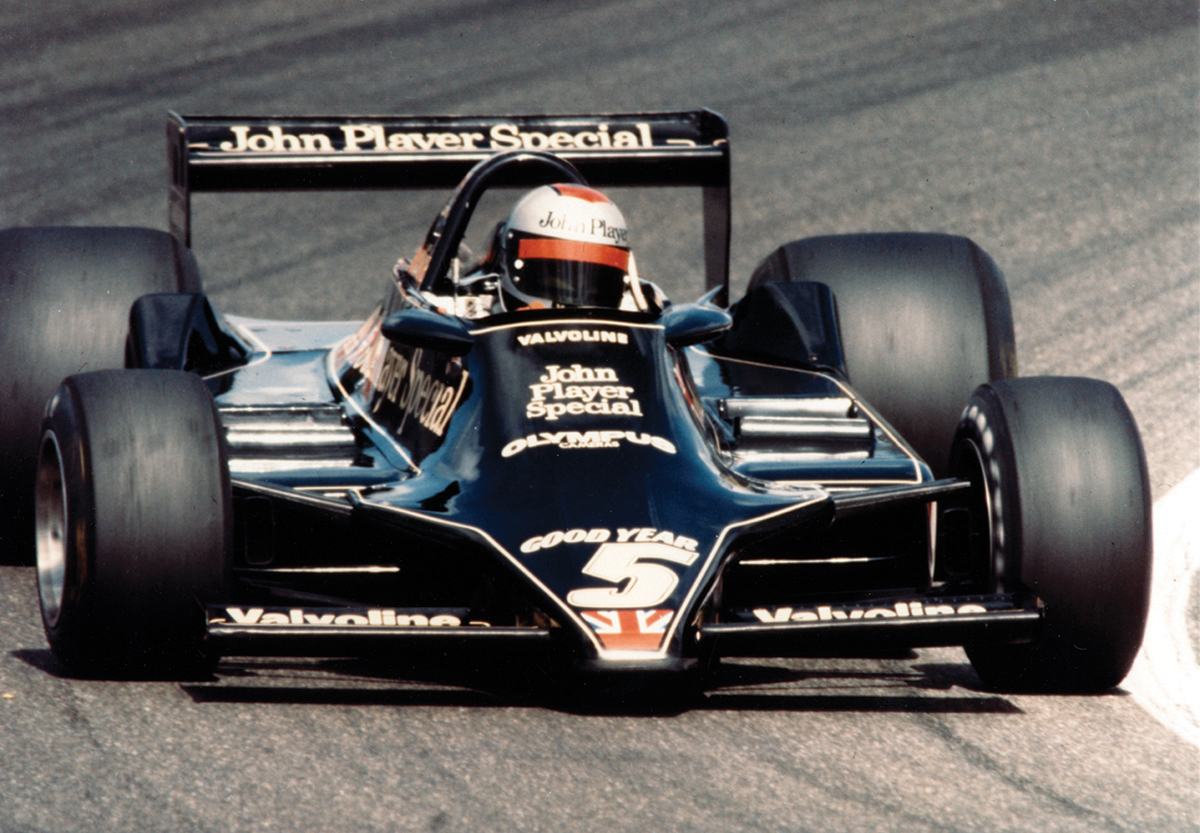
Suddenly, Lotus could corner faster and straighter than the rest of the field.
Andretti won six races, Lotus dominated the Constructors’ standings, and every rival was left scrambling to catch up.
For the next handful of seasons, ground effect was the defining design philosophy across the grid, all sparked by this striking black and gold machine.
Banned for the 1983 season, ground effect lay dormant until its return the paddock in 2022, where the concept shaped an entirely new era of F1.
Williams FW14B (1992) – Active suspension and Mansell’s masterpiece
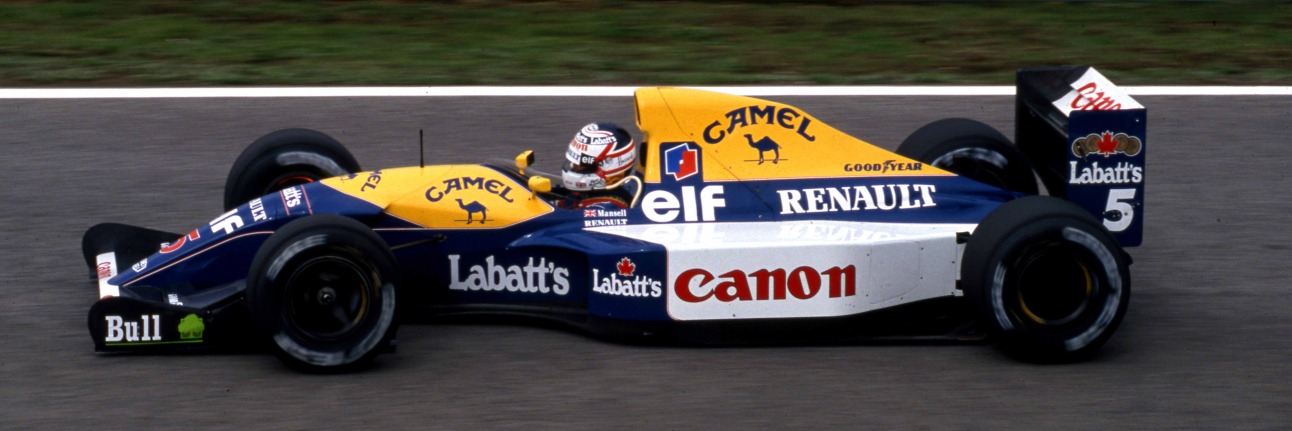
Fast forward to 1992, and F1 witnessed another leap forward. The Williams FW14B, the car in which Nigel Mansell finally claimed his long-awaited title, remains one of the most advanced F1 cars ever built.
Its secret weapon? Active suspension. A system that adjusted the car’s ride height and balance in real time to keep it perfectly planted through corners.
Paired with a Renault V10 engine and Adrian Newey’s astute aerodynamic design, the FW14B was lightyears ahead of its rivals.
Mansell stormed to nine wins – including five from the first five rounds as well as a famous home triumph at the British Grand Prix at Silverstone – and clinched the championship at the Hungarian Grand Prix with five races to spare.
For many fans visiting the Silverstone Festival F1 display, the FW14B will be top of the to-see list, serving as a reminder of one of Britain’s greatest seasons.
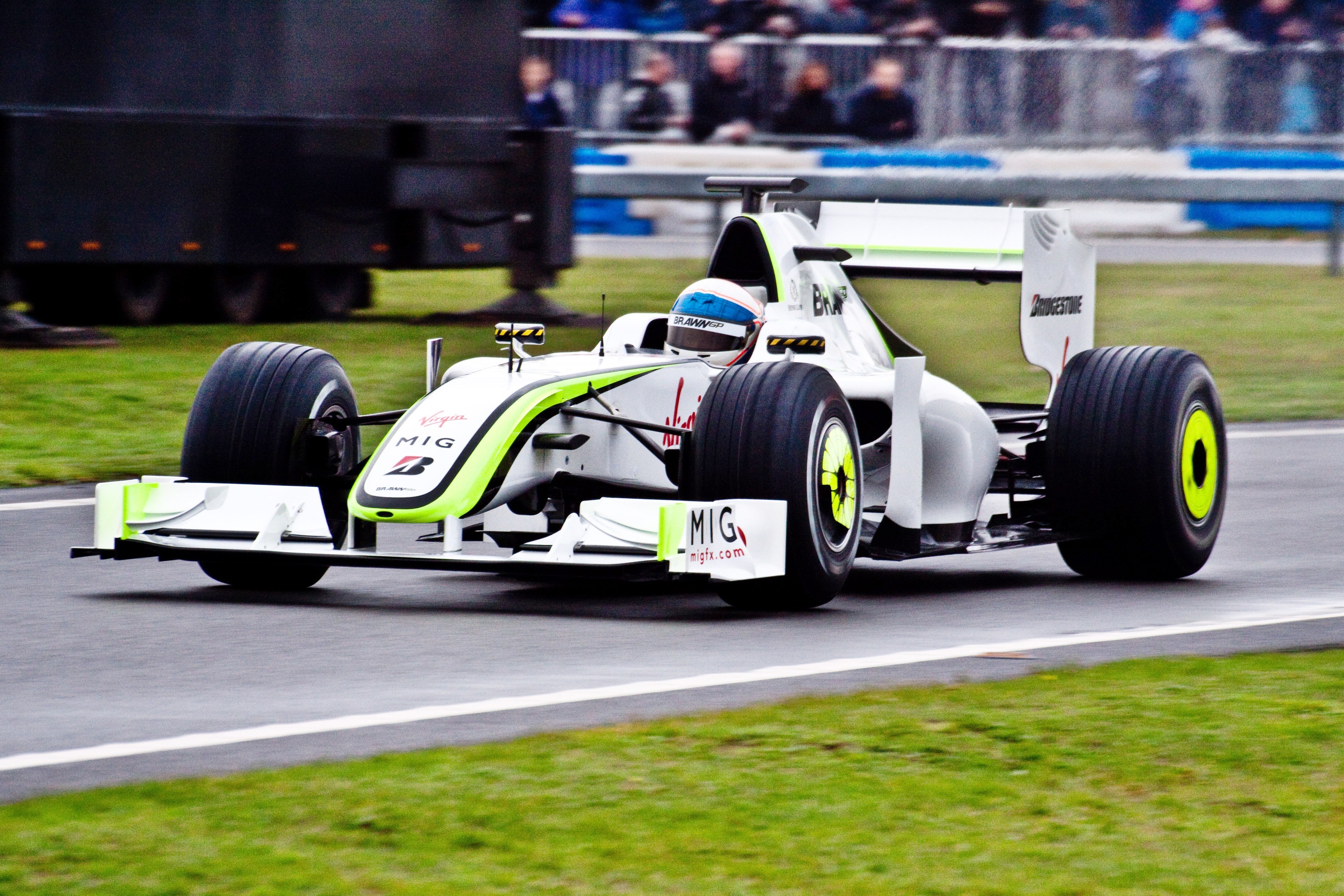
Brawn BGP 001 (2009) – The fairy tale ending for Button
Every great collection needs a fairy tale, and few come close to the Brawn BGP 001.
Born from the ashes of Honda’s F1 exit, Ross Brawn’s team lined up for the 2009 season with just three chassis, a hastily fitted Mercedes engine, and a radical concept in the double diffuser.
This clever aerodynamic device exploited a loophole in the regulations, generating more downforce than anyone thought possible at the rear of the car.
While rivals protested, Jenson Button surged ahead, winning six of the opening seven races.
By the time the rest of the grid caught up, the damage was done.
Button sealed the title with a storming comeback drive at the Brazilian Grand Prix and Brawn GP secured the Constructors’ crown in its one and only season.
Fans exploring the World Champions Collection at Silverstone Festival 2025 will see the very car that turned an underdog story into F1 folklore. Another vintage season for British F1.
Mercedes-AMG F1 W11 (2020) – The DAS controversy
Finally, the modern era is represented by one of the most dominant F1 cars of all time and one that still holds multiple track records to this day, the Mercedes-AMG F1 W11, which carried Lewis Hamilton to his record-equalling seventh world title in 2020.
While the car was already the culmination of years of Mercedes dominance, it stood out for its DAS (Dual Axis Steering) system.
By pushing or pulling the steering wheel, Hamilton and Bottas could subtly adjust the front wheel alignment on the move, helping with tyre warm-up and mid-corner grip.
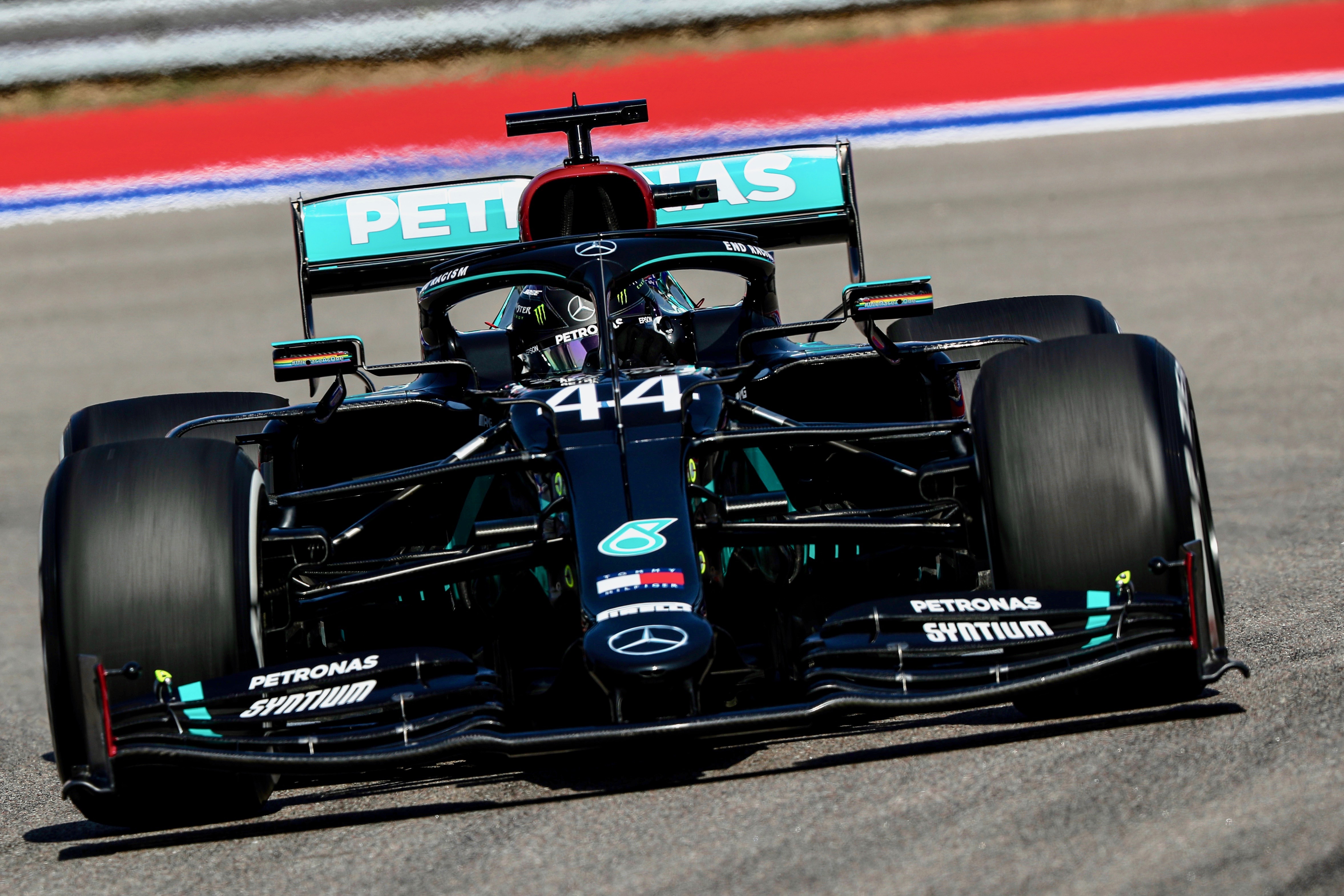
It was an innovation so clever that it was swiftly outlawed, but not before Hamilton used it to devastating effect, winning 11 of the 17 races in a season disrupted by the Covid-19 pandemic.
At the Silverstone Festival 2025, fans can see the W11 up close, a car that embodied Mercedes’ relentless pursuit of marginal gains at the peak of its powers and saw Hamilton equal Schumacher’s record for most Drivers’ titles.
READ MORE: Discover all the cars in the World Champions Collection at Silverstone Festival
Four cars, four revolutions
The Lotus 79, Williams FW14B, Brawn BGP 001 and Mercedes W11 are separated by decades, but they share a common trait: each found a new way to stretch the rulebook and redefine what was possible.
Every champion needs speed and skill, but it is innovation that changes the sport forever. And at Silverstone this summer, you can see the machines that did just that.