


Silverstone's Ultimate Guide to F1 Academy
22 December 2025As an ambitious new project from Formula 1, designed to develop and prepare young female drivers to progress to higher levels of racing competition, F1 Academy debuted in 2023.
The women-only category gives drivers more access to track time, racing and testing, as well as support with technical, physical and mental preparations to progress on the racing ladder on the Road to F1. Based at a Formula 4-level, F1 Academy offers access to the fundamental levels of experience needed to climb this racing ladder and progress to Formula 3 and beyond.
Silverstone’s ultimate guide to F1 Academy highlights everything you need to know about the all-women racing series, dedicated to prepare you for the next instalment of the category in 2025, before looking ahead to the 2026 season.
What are the routes to F1 Academy?
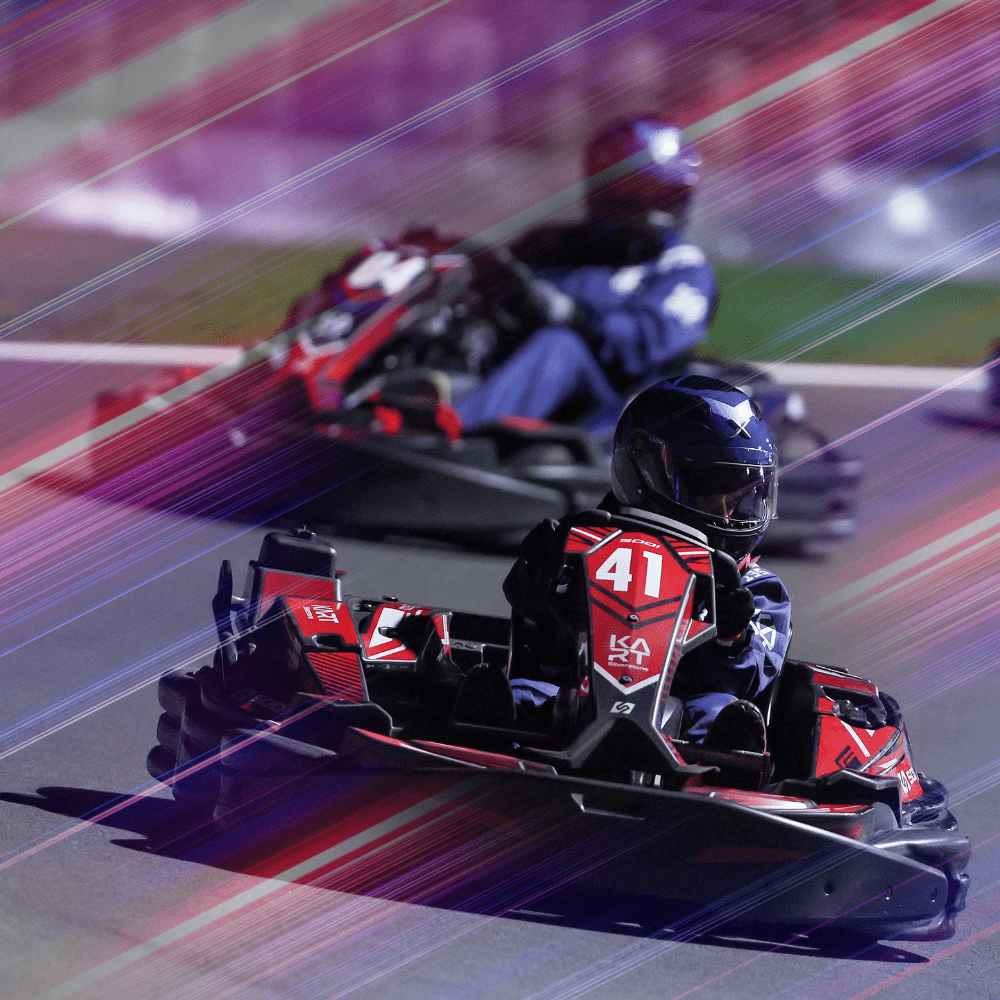
Like Formula 2 and Formula 3, the drivers in F1 Academy begin their career in karting. They make their way through the karting ranks, whether competing in UK or international karting championships, which supports them in acquiring a Grade B, C or D International Circuit FIA Licence, which all drivers participating in the series must hold.
After gaining experience in karting, drivers may compete in other racing categories, from closed wheel racing to open wheel racing. F1 Academy drivers are selected through a combination of their racing ability, which is often shown by performance in junior racing categories, but also eligibility requirements, including age and nationality.
To compete in F1 Academy, drivers must be women aged 16 years or older and 25 years or younger when entering their first race event of the season. F1 Academy also has a Wild Card entry at certain race events; introduced for the 2024 season, a driver is granted a seat for a specific weekend to help strengthen the talent pool in the regions where F1 Academy races, with young drivers from each race region prioritised as the Wild Card choice.
Who are the teams in F1 Academy?
The F1 Academy grid is made up of six teams: PREMA Racing, Rodin Motorsport, Campos Racing, MP Motorsport, ART Grand Prix and Hitech TGR. These teams also compete in other feeder series on the ladder to F1. Every driver in F1 Academy either has support from one of the 10 Formula 1 teams or from other sponsors in the motorsport space, including American Express, TAG Heuer, Tommy Hilfiger, PUMA and Charlotte Tilbury.
Each team enters three drivers, and for 2025, Hitech TGR operates the car driven by the Wild Card drivers across all seven rounds. As a result, the Wild Card entry is eligible to score points in both the Teams’ and Drivers’ standings.
There are several British drivers competing in F1 Academy this year. Ella Lloyd competes with Rodin Motorsport and is supported by McLaren, Alisha Palmowski races for Campos Racing with support from Red Bull Racing and Chloe Chong is part of the Rodin Motorsport team, supported by Charlotte Tilbury.
Previous British drivers in F1 Academy include Chloe Grant, who is currently competing in the Porsche Sprint Challenge Iberica and Jess Edgar, who has raced in karts and closed wheel categories, including the McLaren Trophy, since her stint in F1 Academy. Megan Bruce also made her F1 Academy debut in Singapore this year, standing in as a reserve driver for the weekend.

The F1 Academy season structure
F1 Academy’s 2025 calendar features seven rounds, all of which take place on a Formula 1 Grand Prix race weekend across six countries all over the world. Each round features two races, totalling 14 races across the season.
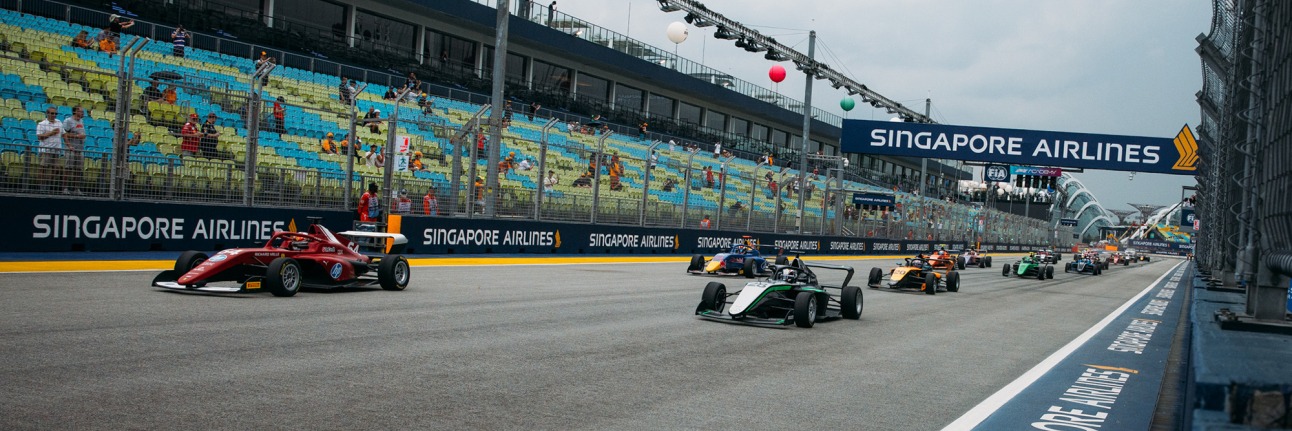
This year, F1 Academy’s calendar consists of visiting China, Saudi Arabia, Miami, Canada, the Netherlands, Singapore and the United States once more, this time to Las Vegas for the final round of the F1 Academy season.
In F1 Academy, drivers are limited to two seasons. This rule is in place to ensure there are opportunities for new talent to enter the championship.
The F1 Academy race weekend structure
The F1 Academy race weekend structure is similar to the F2 and F3 weekend layout, and like Formula 1, sessions are held on Friday, Saturday and Sunday.
On Friday, up to two Free Practice sessions up to 40 minutes each are held and one Qualifying session of 30 minutes is held, only if one Free Practice session occurs on the first day of the weekend. If two Free Practice sessions are held on the Friday, then a 30-minute Qualifying session occurs on Saturday.
Both F1 Academy races are up to 30 minutes long. Race one is held on Saturday and race two is held on Sunday, ahead of the Grand Prix. The grid for Saturday’s race is set by reversing the top eight drivers from Friday’s Qualifying session results, whilst the grid for race two is set by the final classification of the Qualifying session.
Like the other feeder series on the Road to F1, points are awarded for the driver on pole position for the second race of the weekend. Two points are awarded to the driver that is shown on pole position for race two, meaning the driver who sets the fastest time in Qualifying receives the points, permitting she does not receive a penalty. Only the driver on pole for race two receives the extra points for their starting position.
In race one, points are awarded to the top eight drivers. The winner scores 10 points, down to 8, 6, 5, 4, 3, 2 and 1 point for P8. More points are on offer for more drivers in the second race, with the scoring system reflecting that of Formula 1. The winning driver receives 25 points, with second place taking 18 and the third-place driver scoring 15. Then, drivers receive 12, 10, 8, 6, 4, 2 and 1 point respectively down to P10.
An additional point is available in both races for the driver who achieves in the fastest lap. IN race one, the driver with the fastest lap must finish in the top eight places to receive the point, whilst in race two, the driver must finish in the top 10 to receive the extra point.
The F1 Academy car
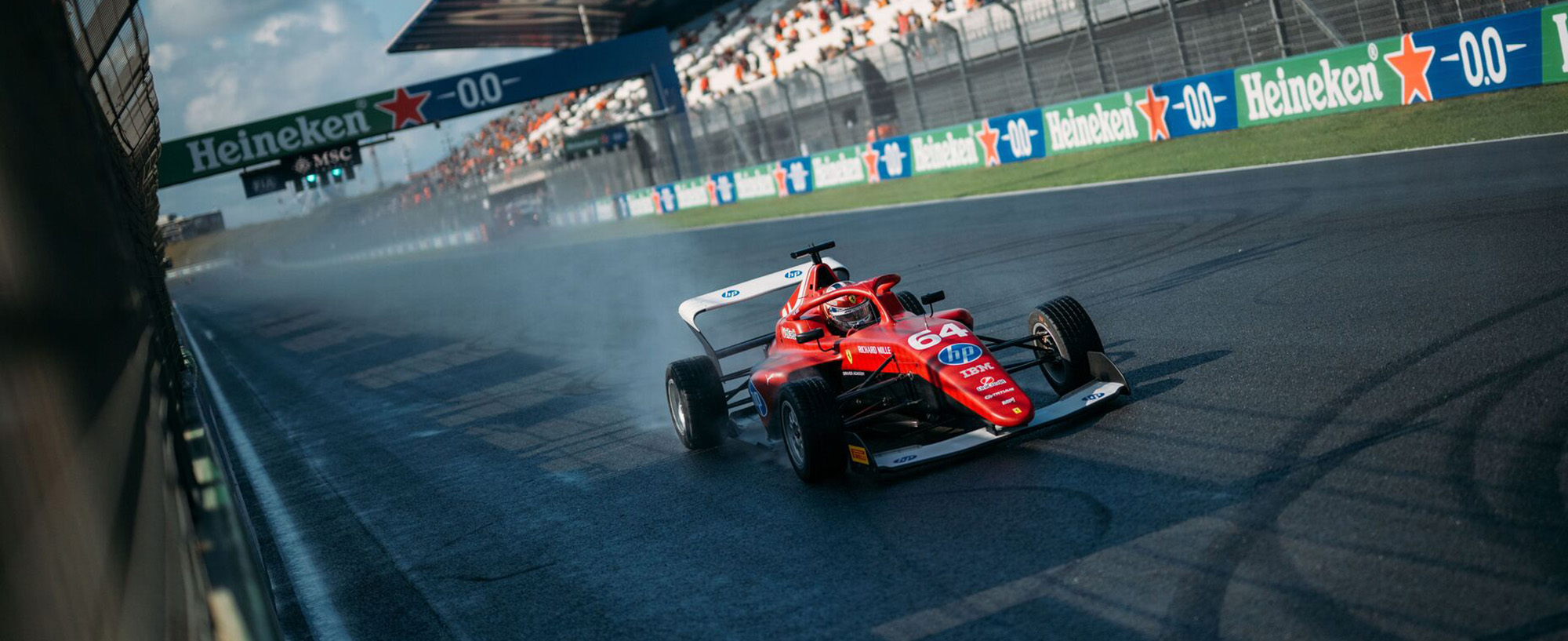
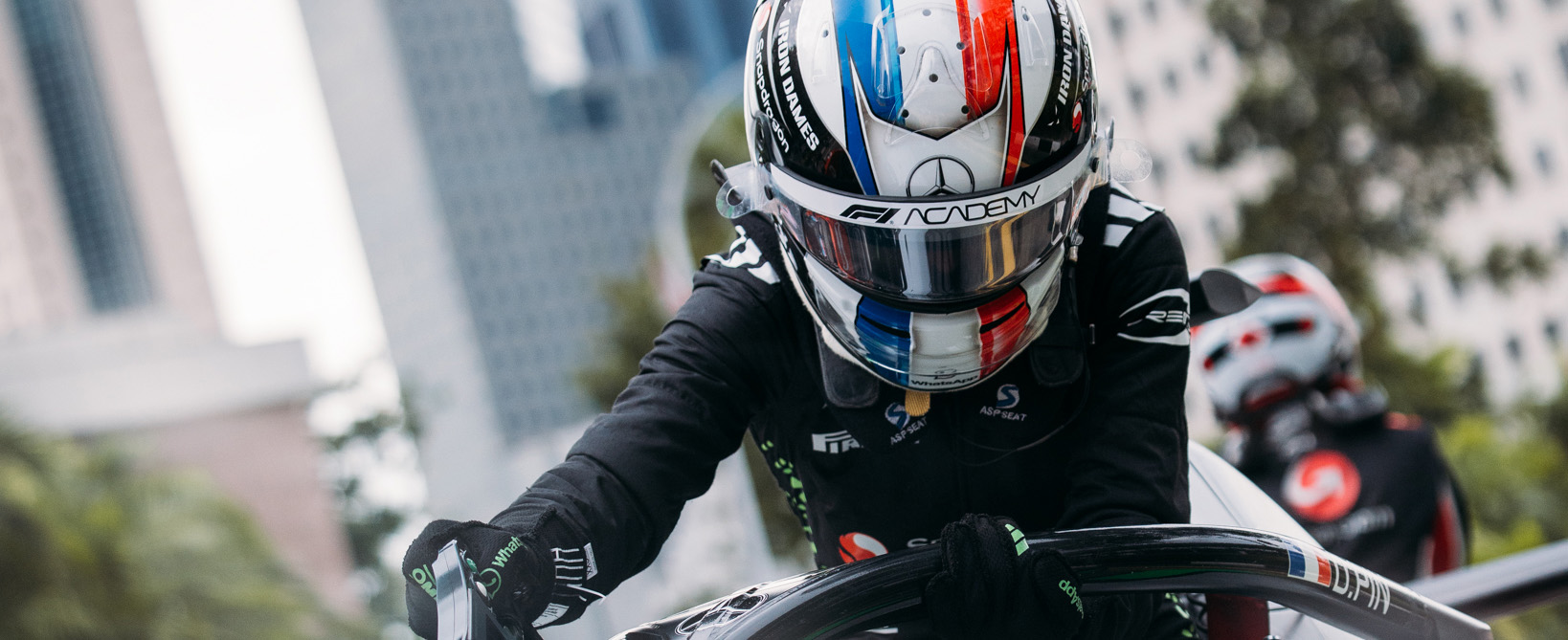
F1 Academy is a single-make series, meaning that all drivers race in identical Formula 4-level cars. The T421 is designed and supplied by Tatuus Automobili and features a 1.4 litre turbo-charged, four-cylinder engines supplied by Autotecnica which deliver 174 brake horsepower. The gearbox is a bespoke, six-gear longitudinal gearbox designed by Sadev, with Magneti Marelli electric command via paddle shift from the steering wheel.
With Pirelli tyres, a steel halo and carbon monocoque, the F1 Academy car is compliant with FIA 2021 safety rules. The aerodynamics of the car are optimised to facilitate overtaking and a wide range of suspension set up possibilities and there is a compromise between performance and cost effectiveness wherever possible.
In F1 Academy, pit stops are not mandatory. They are only necessary if conditions change, for example from dry to wet and vice versa, or if a driver sustains damage during the race. Therefore, the input from teams on the actual car during a race is minimal; their involvement lies in the set up of the car and the race strategy.
The route to becoming an F1 Academy Champion
The F1 Academy Champion is crowned throughout the season, depending on how many points are accumulated by a driver in the 14 rounds across a year. The title is officially secured when no other driver can mathematically catch up in the standings.
Marta García, the 2023 F1 Academy Champion, won a fully funded seat in the 2024 Formula Regional European Championship by Alpine (FRECA). 2024's Champion, Abbi Pulling, won a fully funded seat in the 2025 GB3 Championship with Rodin Motorsport and also received 20 days of testing in the GB3 car to support the campaign, which was funded by F1 Academy. As part of the newly created Pirelli Prize, Pirelli provide a financial contribution towards the seat.
Now, Marta García competes in the 2025 Le Mans Cup with Iron Dames in GT3 whilst Abbi Pulling finished P10 in the GB3 Championship this year, but has also spent time in Formula E, and will take part in the upcoming FIA Formula E Women’s Test with Nissan.
F1 Academy is an empowering initiative with the goal of offering track time and racing experience to young female racing drivers. Their other initiatives include Discover Your Drive, which aims to promote and increase female participation in motorsport both on and off the track. They aim to build a community, increase youth engagement and identify upcoming talent.
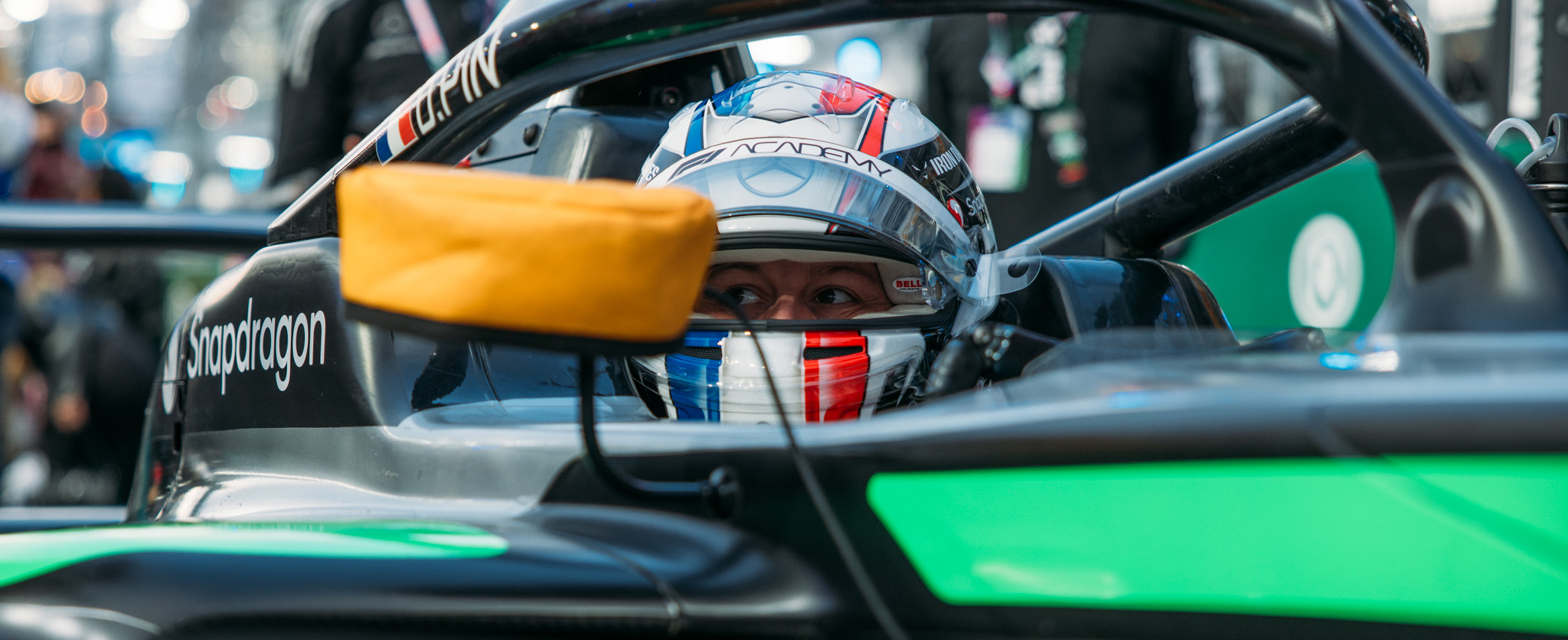
The 2025 F1 Academy season concluded on Las Vegas Grand Prix weekend, with the Championship going to Mercedes-backed driver Doriane Pin, who finished the season with 172 points. Two British drivers finished the season in the top five, with Ella Lloyd in P4 after securing 109 points, and Alisha Palmowski one place behind with 91 points.
F1 Academy is coming to Silverstone for the first time in 2026, as a feeder series for the British Grand Prix. With several British drivers set to take part in the series for 2026, you don’t want to miss what’s going to be an action-packed weekend celebrating female talent in motorsport. Get your tickets for the 2026 British Grand Prix now.