

Karting explained: A beginner’s guide to how karts work
14 April 2026Stepping into a kart for the first time can feel strangely simple. It’s just you, a steering wheel, two pedals and four tyres. But once you’ve got a session under your belt, you begin to understand what it’s really about: pure, unfiltered driving.
Our guide to the inner workings of a kart should give you some context, enough to understand why your first laps feel so fast and so sharp.
Kart anatomy explained
The engine
At the heart of every kart is its engine. Most karts use either two-stroke or four-stroke engines. The difference sounds technical, but the feeling is easy to grasp:
- Two-stroke engines are lighter, rev higher, and deliver punchy, aggressive acceleration
- Four-stroke engines are smoother, more progressive, and easier to get to grips with as a beginner
At Kart Silverstone, the focus is on accessible performance through four-stroke engines. The fleet is designed to feel quick and responsive without being intimidating, so you can build confidence lap by lap.
The chassis
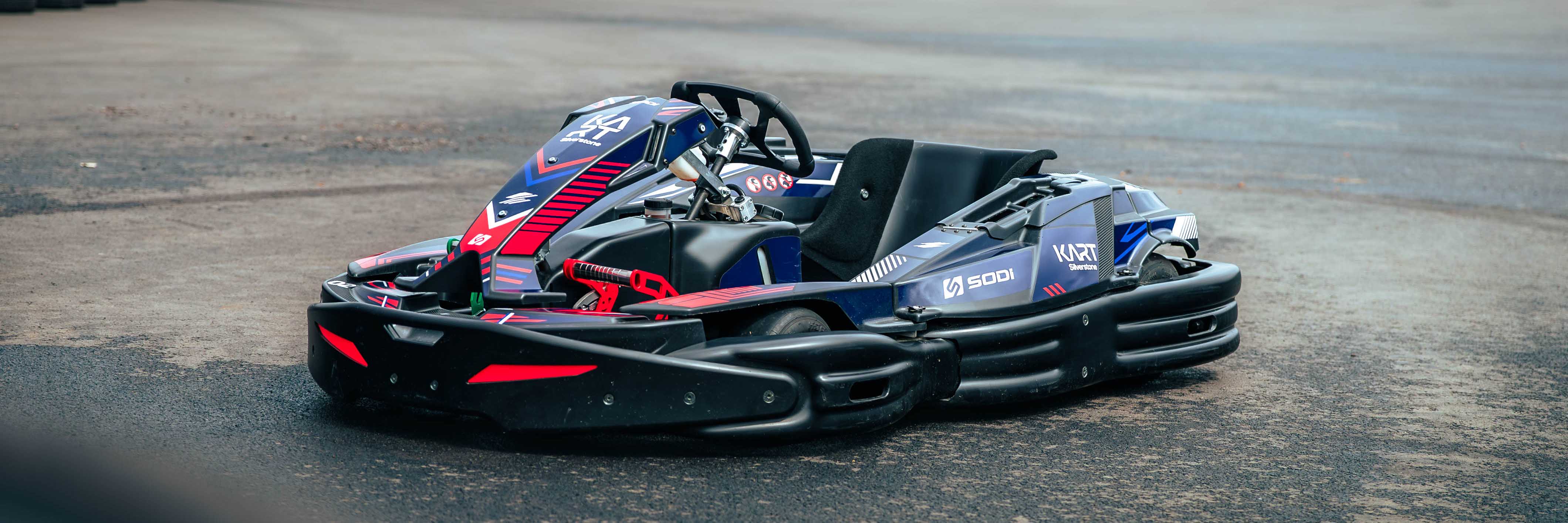
Unlike a road car, karts have no suspension. Instead, the chassis itself flexes as you corner, helping the kart grip the track. Even tiny changes in the frame’s shape or stiffness can completely alter how a kart behaves.
The seat of a kart sits at the very centre of the frame, and so through the chassis, you can feel every bump in the tracks surface and the forces going through it during each corner. That’s what makes it feel so alive underneath you.
The tyres
Dry kart tyres are, in essence, miniature racing slicks that you would see on a single-seater racing car.
There’s no tread like you’d find on a road car tyre. To maximise grip, slick tyres increase the contact patch with the track surface.
The maximised grip, coupled with a lightweight chassis, makes turning in feel immediate, and small mistakes like braking too late instantly noticeable.
The brakes
Kart braking systems are straightforward and effective. After you have pressed the brake pedal, a hydraulic system forces pads to clamp down on the brake disk, which, in turn slows the rear axle and the kart down.
Because most karts brake through the rear axle only, the sensation is different to a car. It can feel more direct, sometimes a little dramatic if you brake too hard and the rear end snaps out on you. But once you learn its nuances, it becomes one of the most rewarding parts of driving a kart.
READ MORE: Getting on track in 2026
Karts vs cars
If you’ve driven a road car, karting will feel like stepping into another world. You are exposed to all the mechanical elements and vibrations that you’re usually separated from.
You sit lower, closer to the ground in a kart. Your body absorbs the forces of each corner and the wind around you. Your inputs are immediate and the feedback, constant.
Why karting makes you a better driver
Karting is one of the most effective ways to develop real driving skill. That’s why so many professional drivers, including Lewis Hamilton, started in karts. It teaches driving fundamentals that carry all the way up the motorsport ladder.
Because everything is so raw, you naturally improve your precision with smoother steering and cleaner lines. Your control is honed as you learn greater control over the brakes and throttle. And all the while, your becoming more consistent through repetition.
Kart Silverstone: High-quality karts, built for everyone
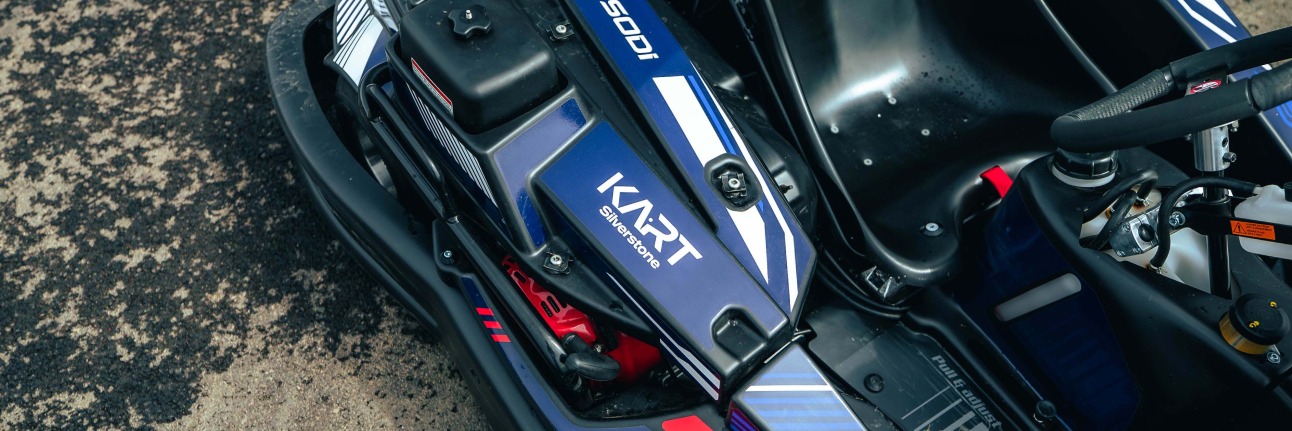
At Kart Silverstone, the experience is moulded around accessible performance. The fleet features Sodi race karts designed to balance speed, safety, and usability:
- RT10 karts: up to 55mph, 390cc engines, with digital displays showing lap times and positions in real time
- LR6 junior karts: smaller, lighter, and perfectly suited for younger drivers, with speeds up to 40mph
Each kart can also be adjusted for driver weight, helping to keep racing fair and competitive no matter your experience level.