

Karting explained: The racing line
23 April 2026There comes a point in a kart when everything seems to fall into place. Corners become opportunities to gain time rather than obstacles where you might lose it.
You can begin to anticipate the next turn, rather than reacting to it. Once that happens, you can start to link one bend to the next, stringing a lap together in one giant, winding thread.
The racing line
It doesn’t matter if you’re Lewis Hamilton, or trying karting for the first time. The basic principles of the racing line remain the same.
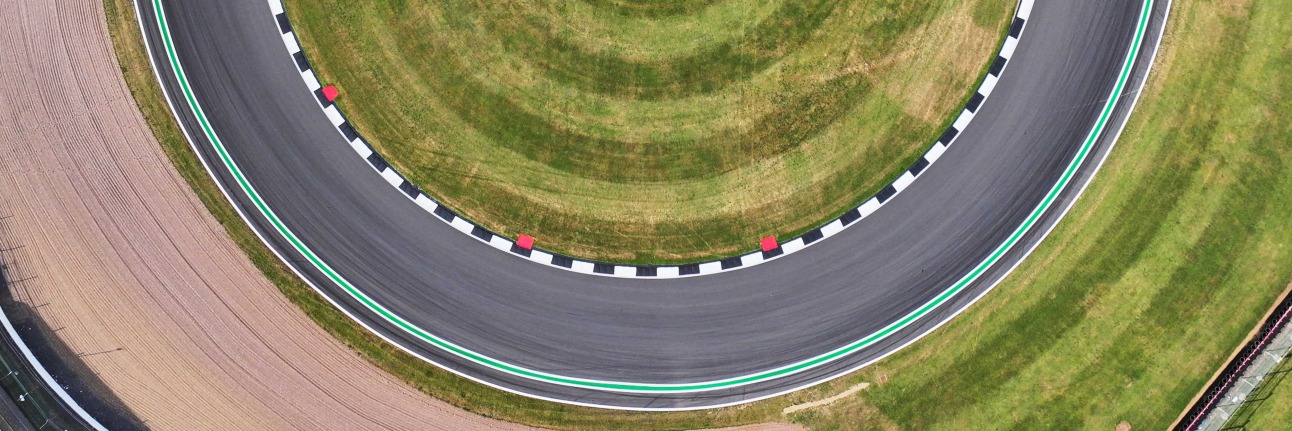
For the majority of corners, the method involves taking a wide entry, clipping the apex, and sweeping out wide once again on exit. Doing that will allow you to maximise your speed mid-corner.
Once you’ve done it for one turn, you can then start to knit them all together in one continuous motion.
The four key moments of a corner
Generally speaking, there are four key elements to every corner. Nail all of them, and faster lap times will follow.
1. Braking point
This is where you come off the throttle and begin slowing the kart down. You want consistency and predictability.
Picking a braking marker, a barrier or the start of a kerb, will help you hit the pedal at the same time every lap. You’ll want to stay as straight as possible at this time to avoid locking up.
2. Turn-in point
Now comes the moment you turn the wheel and steer into the corner. Too early, and you’ll run wide on exit. Too late, and you’ll lose too much speed. Again, it might be helpful to pick a marker to keep things consistent.
3. Apex
The apex is a single point on the inside of a turn, and hitting it should be your top priority for every corner.
It’s usually when the bend’s angle is most acute, and where you get closest to the kerb. Carrying as much speed as possible through this section is crucial for lap time.
4. Exit
This is where you straighten the wheel and accelerate out of the corner. Massive chunks of lap time can be won or lost depending on how cleanly you get away.
Accelerate too early and too aggressively, and the grip can snap away in an instant. Ideally, you want to apply the power in a progressive way when the wheel is as straight as possible.
READ MORE: A beginner's guide to how karts work
Smoothness over aggression
It’s tempting to brake late, turn in hard and stamp on the throttle. It feels like you’re going fast, but that’s rarely the reality.
Especially while you’re still learning the ropes, sharp inputs can unsettle the kart, causing you to lose grip and scrub off speed.
Instead, it can help to focus on:
- Braking in a straight line before you turn.
- Gentle steering inputs rather than sudden movements.
- Gradual throttle application as you exit the corner.
Corner types
Not all corners are created equal, but most fall into a few recognisable categories:
- Fast sweeping corners: Keep your line smooth and minimise steering input to carry speed. There shouldn’t be much need for braking (if any at all) with these.
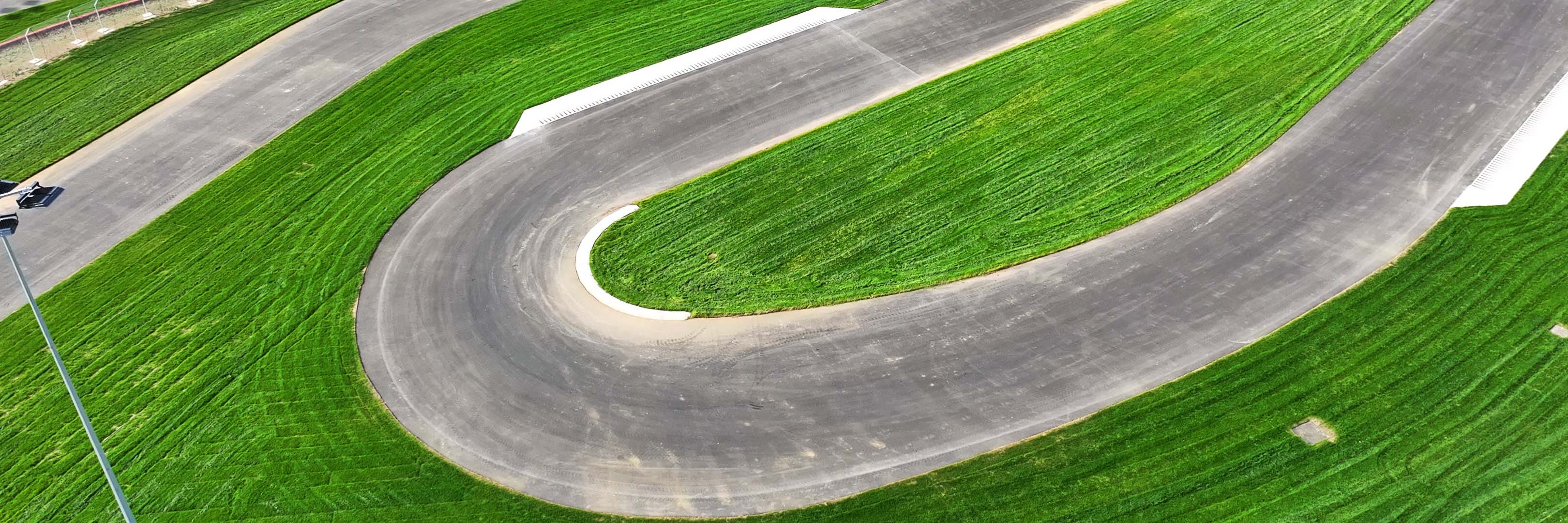
- Hairpins: Brake firmly, rotate the kart quickly, and focus on a strong exit.
- Corner sequences: You should sacrifice one corner to improve the next, and so on until the sequence is complete.
The goal is always the same: reduce the angle of the corner wherever you can.
Patience is key
No one nails the perfect racing line on their first session. You’ll find the real progress in repetition. Braking a little later each lap, and carrying a little more speed each time you pass the same corner.
It can be frustrating, maybe even a little disheartening to put in lots of effort and not see any improvement in lap time. But as is the case with anything, you’ll make improvements, little by little. All it takes is practice and time.
Kart Silverstone: Putting it into practice
At Silverstone, there are several layouts of the kart circuit providing the perfect playground to hone these skills.
Fast, flowing sections reward smooth steering and confidence, while tighter corners demand precision and patience on the throttle.