Which teams have made the best start to F1’s new era?
29 May 2026Five races into Formula 1’s 2026 regulation reset, the pecking order has crystallised, and we’re beginning to see the themes that will define the season.
Some teams have emerged from the winter revitalised, while others look immobilised by the complexity of the new rules.
The new power units and radically different chassis philosophy have reshuffled the grid in 2026, and while there is still a long way to go in this championship, the opening phase of the season has already revealed which teams adapted quickest.
From Mercedes’ latest era of domination to Alpine’s midfield renaissance, here are the teams that have made the strongest start to Formula 1’s new generation.
Mercedes
The 2014 regulation reset is remembered as the launchpad for one of the most dominant eras in Formula 1 history, and 2026 is starting to feel ominously familiar.
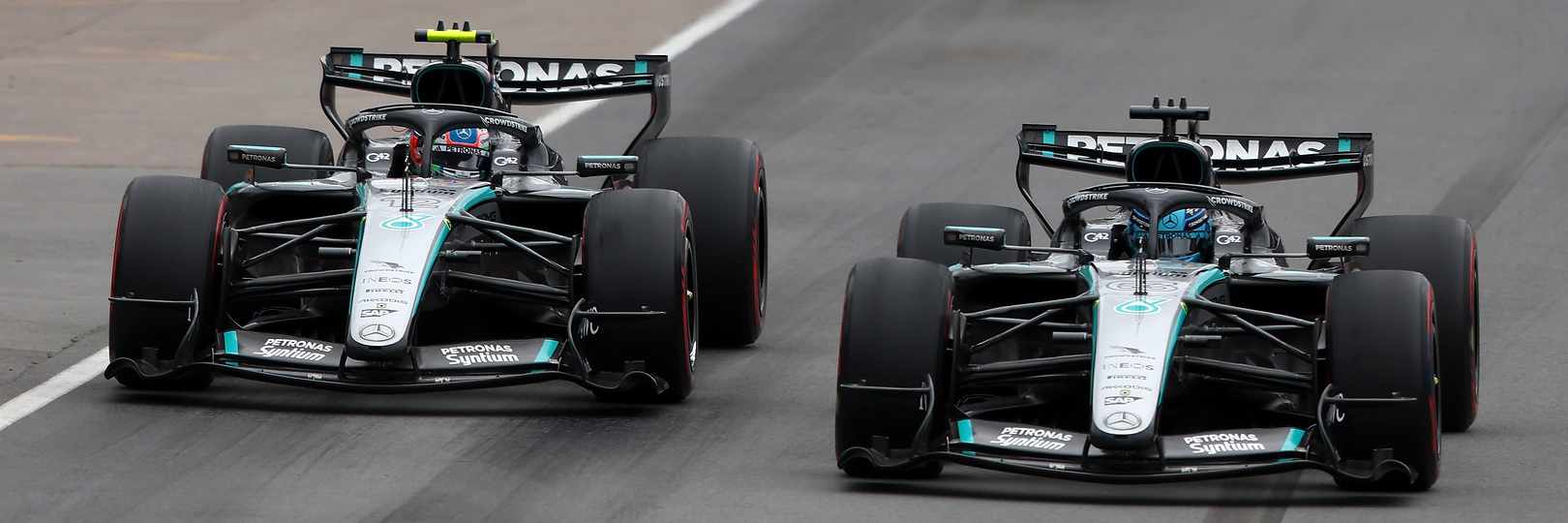
Five races in, the Silver Arrows remain unbeaten. They’ve swept every Grand Prix pole, stacked up victories, and already built a sizeable championship advantage while the rest of the field was left wondering how they got out of the blocks so quickly.
After Mercedes impressed during pre-season testing, George Russell arrived in Australia carrying the kind of calm confidence that only comes when a driver knows the machinery underneath him is special.
Pole position followed in emphatic fashion, before he controlled the Grand Prix under sustained early pressure from Ferrari.
But Kimi Antonelli’s seamless adaptation to the new generation of cars has quickly become the story of the season.
Since standing on the top step in China, Antonelli hasn’t stopped winning, and even when Russell rediscovered his form in Canada, reliability issues ensured a fourth victory in succession for Antonelli.
Perhaps most impressively, Mercedes has escaped the inconsistencies that plagued it throughout the ground effect era. The 2026 car looks stable, predictable, and devastatingly quick across a variety of circuits.
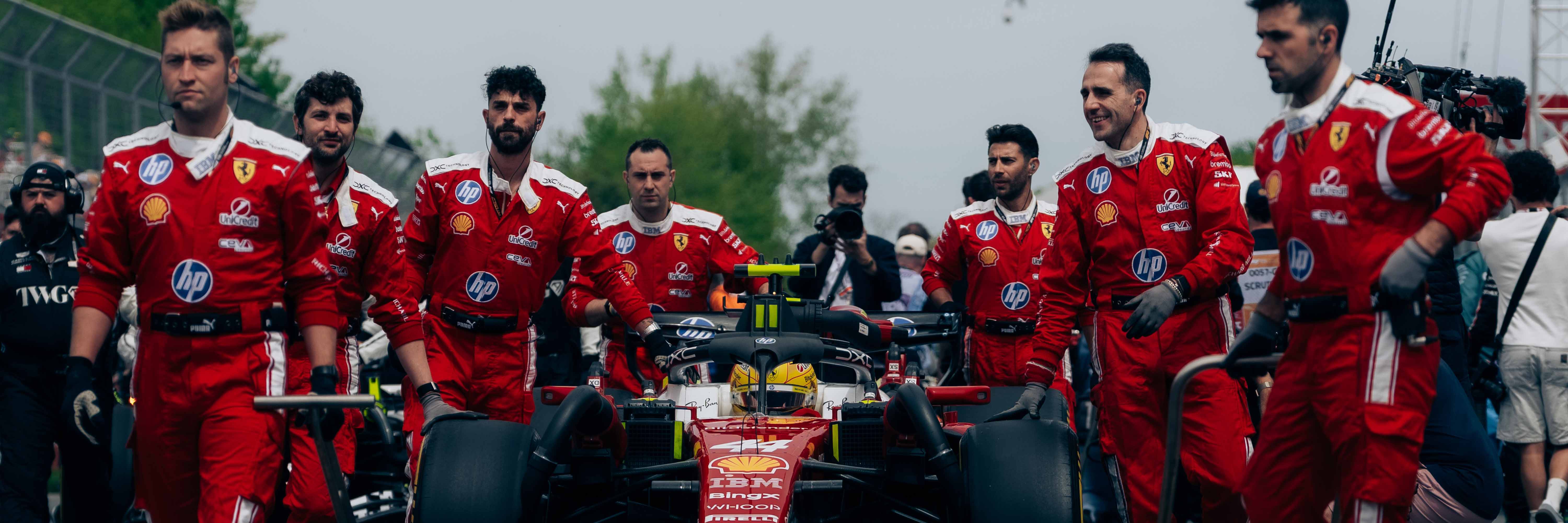
Ferrari
Ferrari might not yet have the outright pace to consistently topple Mercedes, but the Scuderia has still emerged from the regulation reset in far healthier condition than it ended 2025.
The team’s power unit package, particularly its smaller turbo and sharper launches off the line, has made Ferrari Mercedes’ strongest competitor.
It was immediately evident in Australia, where Charles Leclerc stormed into the lead at the start and spent the opening laps locked in a thrilling duel with Russell.
There are also growing signs that Lewis Hamilton is beginning to feel fully embedded within the team as well.
After a difficult debut season in red last year, the seven-time World Champion looks more and more connected to this year’s car as the season progresses.
Hamilton’s podium in China hinted at that rediscovered confidence, while his superb drive in Montreal, where he fought his way past old rival Max Verstappen en route to second place, was arguably his strongest Ferrari performance yet.
Still, Ferrari’s campaign hasn’t been without its downsides. Miami captured the frustration that continues to linger beneath the surface, with Leclerc looking capable of securing a podium before he dropped down the order, while Hamilton never fully recovered after early contact.
Ferrari has all of the ingredients for its strong season: two of the best drivers on the grid and a car capable of consistently fighting near the front. But the Scuderia will have to outdevelop Mercedes if it’s to truly make its mark in 2026, and that will be no mean feat.
Alpine
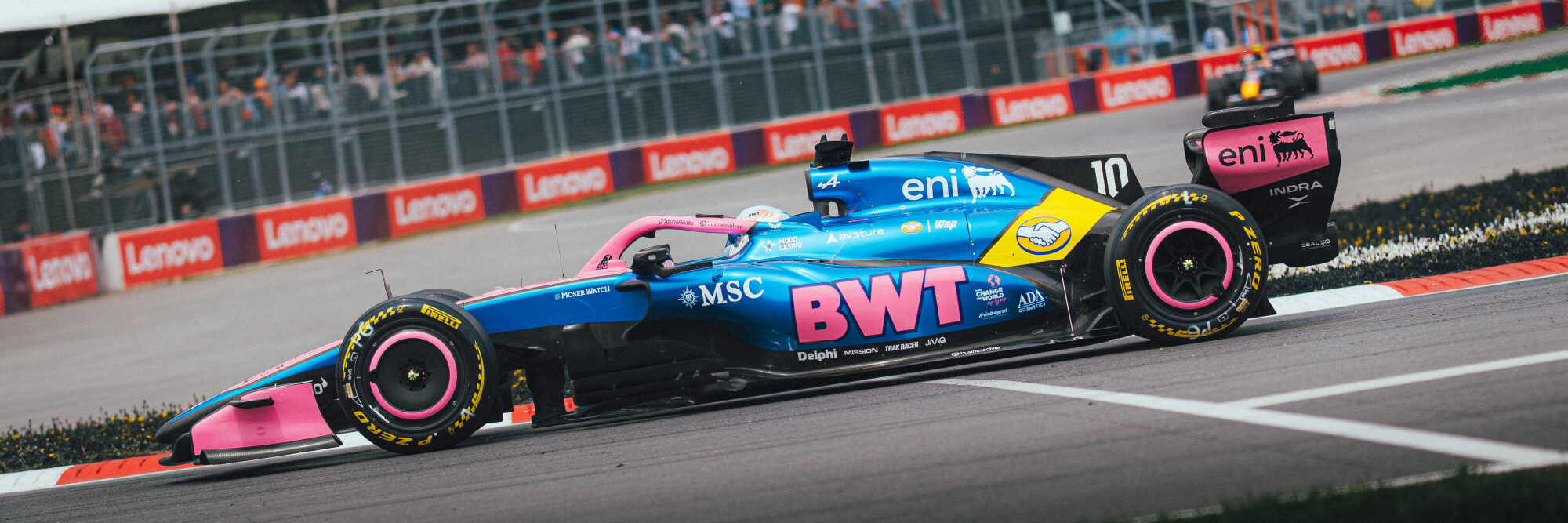
Few teams have made a bigger leap relative to expectations than Alpine, highlighting quite how much the Alpine PU was holding it back.
At the end of 2025, the Enstone outfit finished 10th and last in the Constructors’ Championship, looking fairly directionless. Fast forward to 2026, and they look firmly embedded at the top of the midfield battle.
Much of that progress appears tied to the team’s switch to Mercedes power, which has immediately given Alpine a far stronger platform to build around. But just as important has been the consistency shown race-to-race.
Pierre Gasly started the season superbly, scoring points in every Grand Prix across the opening trio of events and getting his elbows out against faster machinery. His defensive performance against Max Verstappen in Suzuka in particular, underlined a growing energy within the team.
And then, Franco Colapinto found his feet. The Argentine took a major step forward in Miami, comfortably matching, and, at times, outperforming Gasly across the weekend before backing it up with an even stronger performance in Montreal.
A sixth-place finish in Canada marked the best result of his Formula 1 career so far and strengthened Alpine’s hold on fifth in the Constructors’ standings.
Audi
Audi’s arrival as a full works Formula 1 team was always going to be under the spotlight, and while the points table doesn’t tell the full story of its first five rounds, the early signs are quite encouraging.
There was immediate momentum behind the project when Gabriel Bortoleto scored points on the team’s debut in Australia, but more importantly, the underlying pace of the car has hinted at further potential in other races.
The team has regularly hovered around the fringes of the top 10, and both drivers have shown genuine competitiveness during qualifying.
There are weaknesses, though. Poor starts have cost the team positions, and reliability issues have put pay to several promising weekends. Bortoleto and team-mate Nico Hulkenberg recorded a DNS apiece, while the latter also retired from the Miami Grand Prix in the early laps.
It seems the finished article is not quite assembled yet for Audi, but there is enough speed, and the right structure in place. The foundations have been laid, and now they just need to be built on.