


Recharge explained: An F101 beginner’s guide to energy harvesting in F1
24 June 2026Formula 1’s 2026 cars use more electrical energy than ever before, making battery management key to a winning race strategy.
That means drivers and teams will constantly walk a tightrope, balancing when to deploy energy and when to recover it. Recovering that electrical energy is known as Recharge.
But how does Recharge work, when does it happen, and why is it so important in Formula 1’s new era? Our F101 beginner’s guide has everything you need to know.
What is Recharge in F1?
Recharge is the process of harvesting electrical energy and storing it in the car’s battery. The recovered energy can then be deployed by the driver during the lap.
How do F1 cars Recharge their batteries?
One of the most prominent methods for Recharge is under braking, where the hybrid system converts braking energy into electrical energy.
Cars also harvest energy when drivers partially lift off the throttle or during certain full-throttle phases at the end of straights.
These systems work together to continually recharge the battery throughout a race.
Is Recharge automatic?
The majority of Recharge functions are controlled automatically by the car’s Electronic Control Unit (ECU), which manages how aggressively the car harvests energy during different phases of the lap.
Teams will use different Recharge settings depending on the circuit and race strategy, and that allows the system to optimise energy recovery without requiring manual driver input.
Can drivers control Recharge themselves?
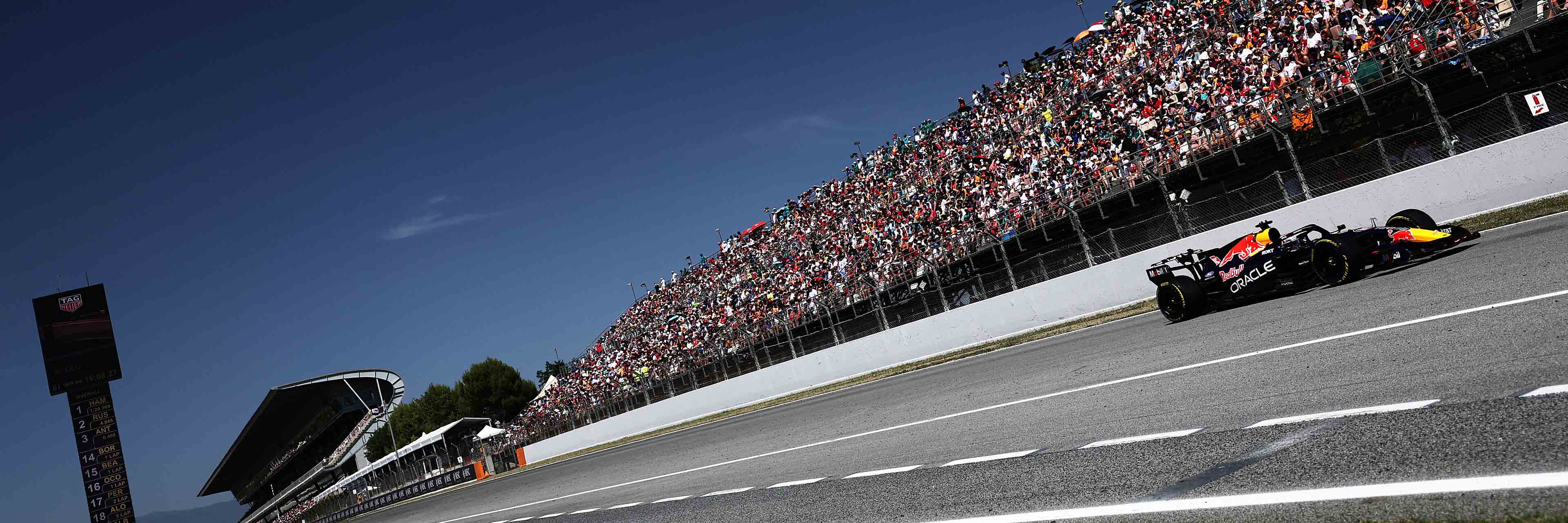
Drivers can directly influence Recharge by lifting off the throttle early into corners, a technique referred to as ‘lift and coast’.
Doing this allows the car to harvest additional energy while slowing down more gradually, but when drivers lift off to harvest extra energy, the car’s active aero closes, reducing the low-drag benefit. That means drivers must carefully balance energy recovery against outright lap time.
What is ‘super clipping’?
Super clipping is another way Formula 1 cars can recover energy, and it happens near the end of a straight while the driver is still at full throttle.
In this situation, the power unit slightly reduces electrical deployment in order to recover energy back into the battery.
Unlike lift-and-coast harvesting, active aerodynamics can remain fully open during super clipping because the driver is still using full throttle.
Why is Recharge so important in 2026?
Recharge is so important because Formula 1’s new power units depend far more heavily on electrical energy.
Drivers are thinking about where to save energy, where to deploy it, and how aggressively to harvest during a lap.
Could Recharge affect racing?
Drivers who manage their energy efficiently could gain a major advantage over a race distance. Poor battery management could leave drivers vulnerable in defensive situations or unable to attack later in the lap.